Roof Types · Shingle
Asphalt Shingle Roofing in San Antonio
The most common roof system on homes across the metro — GAF Certified installation, a wide range of styles, and a 15-year workmanship warranty on new installs.
The most common roof system on homes across the metro — GAF Certified installation, a wide range of styles, and a 15-year workmanship warranty on new installs.
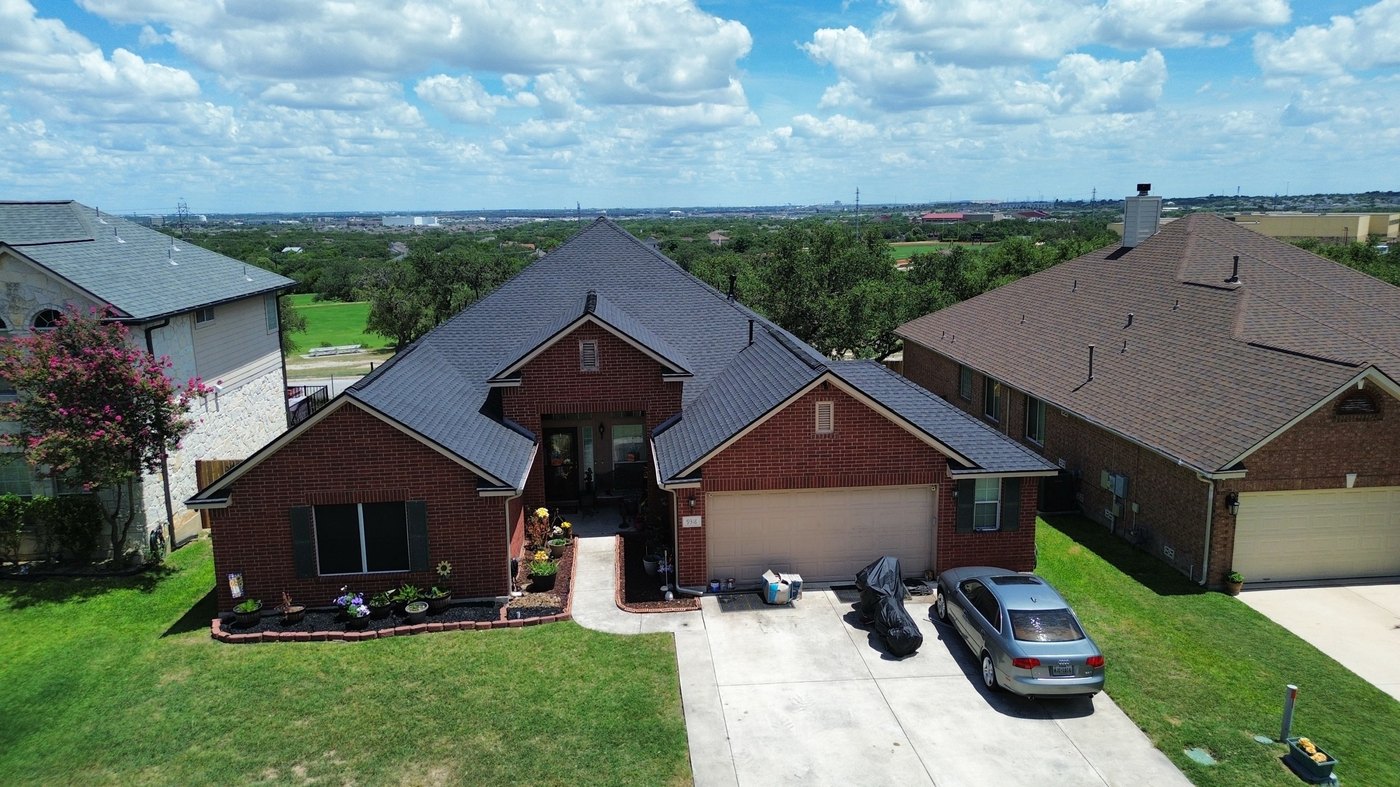
Asphalt shingle is the most common roof system across the San Antonio metro, and the one most people are choosing between tiers of rather than choosing at all. Holmes is a GAF Certified contractor, which is a specific thing rather than a slogan: it means we have met GAF’s own training and quality requirements for installation, not simply that we buy their shingles.
That distinction matters more on shingle than on any other system. A new shingle install from us carries a 15-year workmanship warranty with free annual inspections for up to 10 years, and it sits on top of a Limited Lifetime material warranty from the manufacturer, which runs coverage out to 50 years.
Schedule My Free Inspection
Patch, section replacement, or full re-shingle depending on the extent of damage — a free inspection tells you which.
Roof Repair →Shingle roofs are the most exposed system to granule loss and cracking from South Texas hail season.
Storm Damage Signs →GAF Certified installation backed by a 15-year workmanship warranty, alongside the material warranty from the manufacturer.
Replacement Details →Nearly every shingle quote you will get falls into one of three tiers. They are not three qualities of the same thing — they are built differently, and the difference shows up in the look, the weight, and what the manufacturer is willing to warrant.
| Tier | How it is built | What that gets you |
|---|---|---|
| 3-tab | A single flat layer, cut into tabs. | The lightest and least expensive option, and a flat, uniform appearance. The shortest material-warranty package of the three. |
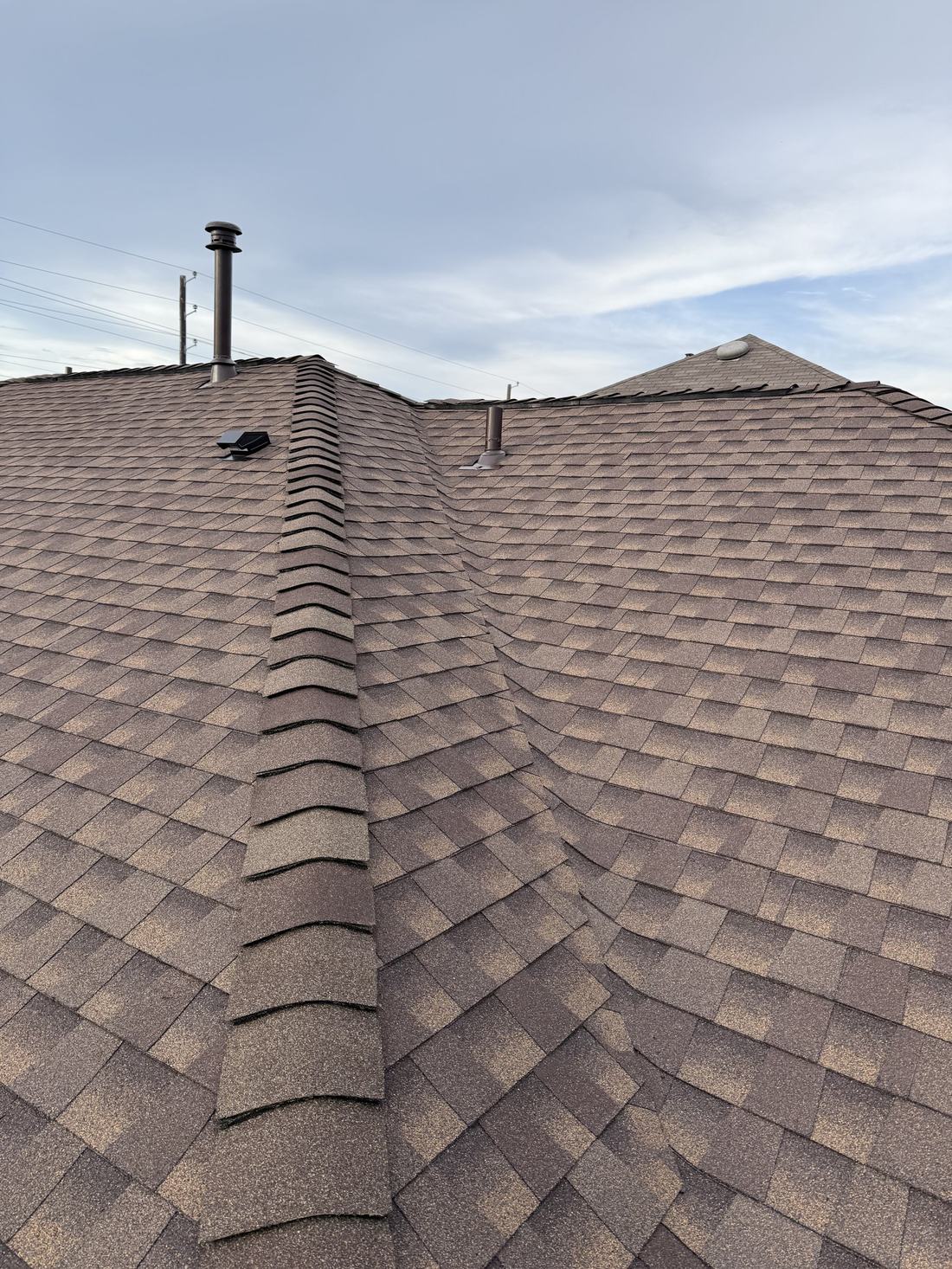
| Architectural (laminate) | Two or more layers laminated together. | Depth and a shadow line instead of a flat grid, more weight carried by the structure, and a stronger manufacturer warranty package. |
| Premium / designer | Heavier laminated construction, often shaped to imitate slate or wood shake. | The most distinctive look and the heaviest product, at the highest cost per square. |
The honest caveat: the tier sets the look and the material warranty. The installation sets whether either one ever matters. A premium shingle nailed high, or laid over a deck nobody inspected, will fail before a correctly installed 3-tab. That is the entire reason the manufacturer certifies contractors at all, and it is why we back our own installation for 15 years alongside the material coverage instead of leaning on it. Both arrive in writing — the terms are on our warranty page.
This is the single most useful thing we can tell a homeowner with an asphalt roof, and it is why we will not diagnose a storm from the driveway.
Asphalt shingles are held down twice: by the nails, and by a strip of adhesive on the shingle beneath that seals each tab flat. Haag Engineering, published through IIBEC, ran full-scale wind-simulator testing on asphalt composition shingles at wind speeds up to 175 mph. Their finding, in their own words, is that any time a seal strip is violated, wind will be sufficient to fold the tab back to cause a “creased, folded or missing shingle.” On inspection after those tests, at a minimum, creases were present.
Here is the part that catches people out. On newer, still-pliable shingles those creases “required very close inspection and tactile manipulation (hand pressure from underneath)” to find at all. The tab falls back down. It lies flat. Seen from the yard, or in a photograph taken from it, the roof looks untouched.
A creased or unsealed shingle is not a hole. It is a conduit. Wind on its own puts no water through your roof — water gets in when the next rain falls on the compromised area. That delay is why so many people connect a ceiling stain to the rain that was falling that day rather than to the storm that actually broke the seal, sometimes a month earlier. The shorthand we use: the storm breaks the seal, and the rain finds the crease.
Finding a crease takes hands on the shingle from underneath. It cannot be done with a drone photo, a phone camera at the curb, or a look out of a truck window. Somebody has to be on the roof. That is the standard our free inspection is held to, and the findings come back to you in writing with photographs, whether we find something or not.
We will not put a percentage on how often this happens. There are numbers circulating in this industry about hidden storm damage that we chased to their sources and could not find one, so we do not print them. The mechanism above is documented engineering; that is what we build our inspection on.
The coloured granules on a shingle are not decoration. They are the shield that keeps ultraviolet light off the asphalt underneath. Lose enough of them in one spot and the asphalt begins to weather directly, which is why granule loss is a real finding rather than a cosmetic one.
A new roof sheds loose granules for a while, and that is expected. What is worth a call is a sudden volume of them — a heavy line of granules in the gutters or a pile at the bottom of a downspout after a storm, especially alongside bare dark patches you can see from the ground.
A hail strike can fracture the mat inside the shingle without removing much of the surface. It feels soft underfoot, like a bruise on fruit, and it is found by hand, up there, rather than by eye from below. This is the same reason the wind crease above is missed: the diagnostic that matters is tactile.
Gutters, downspouts, vents, flashing and the metal on a shed or a fence dent at smaller stone sizes than a shingle does. On a hail call those are often the clearest evidence a storm reached the house at all, which is why we walk the whole exterior rather than only the roof.
| Date | Largest reported hail near San Antonio | Report location |
|---|---|---|
| 2021-05-03 | 4.50″ | Martinez |
| 2021-05-03 | 3.00″ | San Antonio |
| 2021-05-03 | 2.75″ | Brooks Afb |
Across 2020–2026 there are 95 hail reports logged within ten miles of the city centre, in six separate years — 38 of them at 1.5″ or larger and 16 at 2″ or larger. Source: NOAA National Centers for Environmental Information, Storm Events Database (hail reports, 2020–2026). Reports are point observations logged by spotters and trained observers, so they show where hail was recorded — not the full footprint of any storm, and not a substitute for looking at your own roof. NOAA also revises recent months, so the last stretch of any year tends to undercount. Storm or hail damage often qualifies for an insurance claim, and our free inspection documents exactly what you have got. We are roofers, not public adjusters — we document, and the claim stays between you and your carrier.
Shingle is the one system where the repair-versus-replace call is genuinely close often enough to be worth explaining. Four things decide it, and none of them is how much the job is worth to us.
Damage confined to one slope, one valley or a handful of courses is a repair. Granule loss and cracking spread across most of the roof is not — patching that buys you a service call rather than a fix.
Shingle lines get discontinued and colours fade in the sun. On an older roof a repair can be structurally perfect and still be visible from the street. We would rather tell you that before we do it than after.
If the deck has gone soft, no amount of new shingle on top of it is a repair. That is found by walking the roof and, when it is warranted, from the attic side.
A roof near the end of its service life is not worth an expensive partial. If the roof has another few seasons in it, that is what the report will say — we never upsell unnecessary services or push products, and that is not marketing copy, it is the line the business was built on.
We put the answer in writing either way. Our repair or replace page goes deeper on the decision itself, and roof repair covers what the repair work involves.
Shingle earns its position on this many roofs for reasons that hold up: the widest range of styles and price tiers of any system, a lightweight material that does not ask anything unusual of the structure, versatility across complicated rooflines with lots of angles and penetrations, and a repair that is genuinely straightforward when damage is localised. It is also the system with the deepest bench of installers, which is a benefit when it comes to scheduling and a risk when it comes to who you pick.
The tradeoff against metal is coverage length: our workmanship warranty runs 15 years on shingle against 20 on metal, which is a fair summary of how the two systems differ in the long run. If you want the three compared side by side on the points that actually differ, that is what the roof types page is for.
Probably, yes. The documented wind-damage signature on an asphalt shingle is a crease at the seal line that lies flat and is very hard to spot from below — Haag Engineering’s wind testing found that on newer shingles it takes hand pressure from underneath to detect. A roof that looks fine from the driveway is not evidence of much. The inspection is free.
Because a creased or unsealed shingle is a conduit rather than a hole. Wind alone puts no water through it; the water arrives with the next rain that falls on the compromised area. The storm breaks the seal, and the rain finds the crease.
Construction. A 3-tab is a single flat layer; an architectural shingle laminates two or more layers together, which gives it depth, a shadow line, more weight and a stronger manufacturer warranty package.
A modest amount is normal, especially on a newer roof. A sudden heavy line of them after a storm, or a pile at the base of a downspout alongside visible dark patches up above, is worth a call.
Yes. GAF Certified means Holmes has met GAF’s own training and quality requirements for installation, not just that we use their product. Anyone can buy the shingles.
When granule loss and cracking are widespread across most of the roof, when the shingle can no longer be matched, when the decking underneath has gone soft, or when the roof is near the end of its life anyway. A free inspection gives you an honest read instead of a guess — and if the roof can hold another season, that is what we will tell you.
A 15-year Holmes workmanship warranty with free annual inspections for up to 10 years, plus a Limited Lifetime material warranty from the manufacturer, which runs coverage out to 50 years. Both in writing.
GAF Certified installation, a 15-year warranty on our own workmanship, and Joshua Holmes’s 20+ years of roofing and contracting experience. We are registered with the City of San Antonio as HIC-24-00928 and carry General Liability and Workers’ Compensation coverage. We respond and coordinate an inspection within 24 hours of your call.
Pick your city for the local details — the recorded hail history for that area, which county you fall in, and the towns we cover on the same run.