Book Now
San Antonio, TX
Change
A vibrant nighttime cityscape featuring tall buildings, bright lights, and a prominent red sculpture in the foreground
Locations

San Antonio, TX

Holmes Roofing & Exterior Solutions

San Antonio & Surrounding Areas
Business Hours
Mon - Sat - 9:00AM-6:00PM
Sun - Closed
Call Us Today
(210) 440-1013
Connect With Us

Your San Antonio Roofing Contractor

San Antonio is one of the largest cities in the country, and finding a roofer here can feel like drinking from a fire hose. Dozens of contractors run ads. National franchises compete with family operations. After every hailstorm, you get door knocks from storm chasers and mailers from companies you’ve never heard of. It’s a lot.

We’re Holmes Roofing & Exterior Solutions, based in Selma — about 15 minutes northeast of downtown — and we’ve worked on roofs across every corner of the SA metro. We don’t have a marketing department or a fleet of 40 trucks. What we have is Joshua Holmes on your roof during the inspection, answering your calls directly, and standing behind the work personally.

In a city this size, that matters more than most people realize. The big operators hand you off to a project manager you’ve never met. We don’t do that.

What a roof replacement costs in San Antonio: a typical 2,000 sq ft home with architectural shingles runs $12,000–$20,000 depending on complexity, pitch, and stories; tile replacement runs $25,000–$45,000. Most shingle replacements are completed in a single day. Get your exact number with a free inspection: (210) 440-1013.

Why San Antonio Is Different for Roofing

The Most Hail-Damaged City in Texas

San Antonio holds the unfortunate distinction of being the costliest city in Texas for hail damage — and Texas leads the nation. The April 12, 2016 hailstorm alone caused $1.36 billion in insured losses across the metro, damaged over 110,000 vehicles, and triggered thousands of full roof replacements. That single event reshaped the local roofing market.

But 2016 wasn’t a one-off. The SA metro sees significant hail nearly every spring:
March 2025: 1.50-inch hail near the city center
May 2025: Multiple rounds of severe hail across neighborhoods from Leon Valley to the northeast corridor
April 2024: Golf ball to 4-inch stones reported in Leon Valley and the northwest side
Spring 2023: Repeated hail events across the I-35 and Loop 1604 corridors

This frequency means San Antonio roofs take a cumulative beating. A roof that survived one storm may have compromised shingles — granule loss, hairline fractures in the mat, lifted edges — that make it vulnerable to the next event. We inspect for cumulative damage, not just the obvious dents.

A City of Microclimates and Roof Types

San Antonio sprawls across 500+ square miles, and the roofing challenges change dramatically depending on where your home sits:

  • Hill Country edge (northwest/north): Higher elevation means greater hail exposure from orographic lift. Stone Oak, Shavano Park, and The Dominion see more frequent and larger hailstones than downtown. Metal and tile roofing are more common here.
  • Historic core (Alamo Heights, King William, Monte Vista): Older structures with steeper pitches, clay tile, slate, and wood shake. Historic district regulations add material and color restrictions that most contractors aren’t equipped to navigate.
  • Suburban growth rings (Alamo Ranch, Far West, Far North): Newer construction with builder-grade composition shingles. These homes are 5-15 years old and approaching their first repair or replacement cycle.
  • South and East Side: Established neighborhoods with a mix of housing eras. Flat-roof commercial properties and older residential stock with ventilation and decking issues common to pre-1980s builds.

One-size-fits-all roofing doesn’t work here. The contractor who replaces composition shingles in Alamo Ranch may have zero experience with tile restoration in Alamo Heights or metal roofing in Stone Oak. We’ve worked on all of them.

San Antonio Neighborhoods We Serve

North San Antonio

Stone Oak & Sonterra — Built primarily from the 1990s through 2020s, Stone Oak is one of San Antonio’s most established master-planned areas. Homes range from $315,000 to over $2.2 million, typically two-story brick with 1,800-5,700 square feet and 25-35 roof squares. Common materials: Spanish S-tile and barrel tile on the higher-end homes, premium architectural shingles on the rest. The mature live oak canopy across Stone Oak creates specific challenges — debris accumulation in valleys, reduced drying time on north-facing slopes, and moss growth on shaded sections. NEISD school zones (Reagan, Johnson) drive property values, making roof condition a significant factor in resale.

Rogers Ranch & Canyon Springs — Newer developments along the US-281 corridor north of Loop 1604. Builder-grade shingles from the mid-2000s are now 15-20 years old and approaching end of life. We’re seeing a wave of first replacements in these neighborhoods. The elevation here — higher than the city center — means slightly greater hail exposure.

Premium Enclaves

The Dominion — Gated luxury community off I-10 and Loop 1604 with homes from $700K to multi-million. Tile roofs (concrete and clay) dominate, with standing-seam metal on modern builds. HOA requirements are strict — pre-approval required for material, color, and contractor. We handle the HOA submission process. Tile repair here requires matching existing profiles that may be discontinued; we source through specialty distributors, not big-box suppliers.

Shavano Park — An incorporated city within San Antonio with homes dating from the 1950s-1960s originals alongside newer luxury builds. The older homes often have outdated ventilation systems and single-layer decking that should be assessed during any reroofing project. Lot sizes range from compact garden homes to 5-acre estate properties. Mature oaks are the defining feature — and the primary source of roof maintenance issues (debris, reduced airflow, branch impact during storms).

Historic Core

Alamo Heights (78209) — Established in the 1920s, Alamo Heights blends Spanish Colonial, Mediterranean, Tudor Revival, and Craftsman styles. Many homes have steep-pitched roofs with clay tile, wood shake, or architectural slate. Replacement materials must match the character of the streetscape. Working on these roofs requires understanding of older framing systems — many have skip-sheathing designed for wood shake, which must be properly addressed when converting to modern materials. Insurance replacement cost valuations in Alamo Heights are typically higher than standard SA metro — make sure your policy reflects actual rebuild cost, not assessed value.

Terrell Hills — Adjacent to Alamo Heights with similarly established homes. Spanish Revival and Colonial styles dominate. Many of these homes have clay tile roofs that are 40-60 years old — still functional but with underlayment that has long exceeded its design life. A tile roof that looks fine from the ground may have failed felt underneath, leading to hidden leaks. We conduct underlayment assessments without removing tile unnecessarily.

King William District — San Antonio’s first residential historic district, with homes built between 1850 and 1899. Roofing work here must comply with Historic and Design Review Commission (HDRC) requirements. Materials are restricted — typically standing-seam metal or natural slate to match the original construction. Storm damage repairs must use historically appropriate materials even when insurance adjusters push for cheaper modern alternatives. We work with the HDRC approval process and can guide homeowners through the application.

Monte Vista — Another designated historic district with homes from the early 1900s. Eclectic architectural mix including Colonial Revival, Prairie, and Craftsman. Similar HDRC requirements apply. Roof access can be challenging due to mature trees and narrow lot lines — equipment staging needs careful planning.

Growth Corridors

Alamo Ranch & Westover Hills — San Antonio’s northwest growth engine along Loop 1604 and I-10. Homes built from the mid-2000s onward, predominantly composition shingle. The first wave of these homes is hitting the 15-20 year replacement window now. Builder-grade 3-tab shingles installed during the construction boom are underperforming in SA’s heat cycle. Upgrading to dimensional architectural shingles during replacement adds curb appeal and insurance value.

Far West Side (Potranco Road corridor) — Among the newest construction in the metro. These homes are still under builder warranty for the most part, but we see warranty gaps — flashing details at walls and around penetrations that don’t meet manufacturer specs. Worth inspecting at the 3-5 year mark, before the builder warranty expires and issues become the homeowner’s problem.

Northeast (Converse/Live Oak corridor into SA) — Covered in detail on our Converse and Live Oak pages. The SA side of this corridor includes Windcrest and the neighborhoods along Walzem Road with homes from the 1970s-1990s.

Building Permits and Codes in San Antonio

San Antonio follows the International Building Code (IBC), with the 2024 edition effective as of May 1, 2025. This update brought new energy efficiency requirements and updated structural provisions.

When permits are required:
– Full roof replacement — always
– Repairs affecting more than 25% of the roof area
– Any work involving decking or structural elements
– Re-roofing over an existing layer (some cases)

Historic district overlay: King William, Monte Vista, Lavaca, Dignowity Hill, and other designated districts require HDRC review before any exterior modification, including roofing. This adds 2-4 weeks to the timeline but is non-negotiable — work done without HDRC approval can result in fines and forced reversal.

Permit office: Development Services Department, Cliff Morton Development and Business Services Center, 1901 S. Alamo St., San Antonio, TX 78204.

We handle all permitting as part of our standard scope. You don’t need to visit the permit office or deal with inspection scheduling.

Insurance Claims in San Antonio

San Antonio’s hail frequency means most homeowners will file at least one roof-related insurance claim during their time in a home. The process matters as much as the roofing work itself.

Major carriers active in SA:
USAA — Headquartered in San Antonio, extremely common especially in north SA and military-connected neighborhoods. Their adjusters know the local market, which usually means faster claims but also tighter scrutiny on line items.
State Farm — The largest single-carrier payout in Texas hail history, with SA metro claims making up a significant share. Large presence across all SA neighborhoods.
Allstate, Liberty Mutual, Farmers, Amica — All active, each with different supplement processes and preferred documentation formats.

What we do: We document damage using the same Xactimate software your adjuster uses. When the initial estimate comes in low — and honestly, that happens more often than it should — we file supplements with detailed photo documentation and line-item justification. The supplement process is where most homeowners lose money, because you don’t know what’s missing from the estimate. We do — and we make sure your supplement request has everything it needs before it goes to the carrier.

Think your roof took hail damage? Get a straight answer before you call your insurance company — call (210) 440-1013 or schedule your free inspection online. We’ll document what’s there and tell you honestly whether a claim makes sense.

Texas HB 2102 compliance: Texas law prohibits roofers from paying or rebating insurance deductibles. If a contractor offers to “cover your deductible,” walk away — that’s a Class B misdemeanor for them and it can void your claim. We follow the law and we explain why it protects you.

Why Holmes Roofing in San Antonio's Competitive Market

San Antonio has hundreds of roofing contractors. Some have been here for decades. Some showed up last storm season and will leave after the next one. Here’s what makes us different:

Joshua is on every job. He personally inspects every roof, meets every homeowner, and oversees every installation. You’re not getting handed off to a crew foreman you’ve never spoken to. When you call our number, Joshua picks up.

GAF-certified installation. Non-certified installation voids manufacturer warranties — and most homeowners don’t discover this until they file a claim and get denied. Our GAF certification means the manufacturer stands behind both materials and labor. In a market with hundreds of contractors, that’s one of the few things you can verify before signing.

Full-service exterior. Roofing, siding, gutters, paint — we handle the complete building envelope. After a hailstorm, the damage rarely stops at the roofline. Gutters, downspouts, window screens, and siding all take hits. One contractor, one claim, one project — instead of juggling three companies on three timelines.

We’re not going anywhere. We live and work in the SA metro. Our reputation is our livelihood. The out-of-state storm chasers who flood the market after major hail events will be gone in 60 days. We’ll still be here when your warranty question comes up two years from now.

We also serve the neighboring communities of Helotes, Live Oak, and Selma.

San Antonio Roofing FAQ

Answers by Joshua Holmes, Owner — Holmes Roofing & Exterior Solutions, Selma, TX.

How much does a roof replacement cost in San Antonio?
For a typical 2,000-square-foot home with architectural shingles, expect $12,000-$20,000 depending on complexity, pitch, and stories. Larger or multi-story homes with premium materials run higher. Tile roof replacement runs higher — $25,000-$45,000 depending on tile type and underlayment condition. These ranges reflect 2026 SA metro pricing.

Do I need a permit to replace my roof in San Antonio?
Yes. Full roof replacements require a permit from the Development Services Department. We handle the permit application, scheduling, and final inspection as part of our standard service. Historic district properties require additional HDRC review before the permit can be issued.

How do I know if hail damaged my roof?
You often can’t tell from the ground. Hail damage to composition shingles shows as dark spots where granules have been knocked off, exposing the black mat underneath. On tile roofs, look for hairline cracks or chipped edges. Metal roofs show dents. We offer free post-storm inspections and document findings with photos — whether or not it leads to a claim.

Should I file an insurance claim after a hailstorm?
If damage is present, yes. Most Texas homeowner policies require you to file within one year of the storm date, though some allow two years — check your specific policy terms. Filing a single weather-related claim generally does not raise your rates under Texas law, though multiple claims over time can factor into renewal decisions. The bigger risk is NOT filing and discovering years later that the damage has progressed to a leak.

How long does a roof replacement take in San Antonio?
Most residential replacements take 1-3 days depending on size, complexity, and weather. Tile roofs take longer — typically 3-5 days. Permitting adds a few days to the front end, and historic district HDRC review adds 2-4 weeks before work can begin.

What roofing materials work best in San Antonio’s climate?
South Texas heat is the primary aging factor. Lighter-colored architectural shingles with proper ridge ventilation and attic insulation will last 20-25 years. Dark shingles on a poorly ventilated roof may fail in 15. For premium homes, standing-seam metal (rated 40-60 years) and concrete tile (rated 50+ years) offer the best long-term value despite higher upfront cost. Impact-resistant Class 4 shingles qualify for insurance discounts up to 28% on the wind/hail portion of your premium.


Recent Roof Work in San Antonio

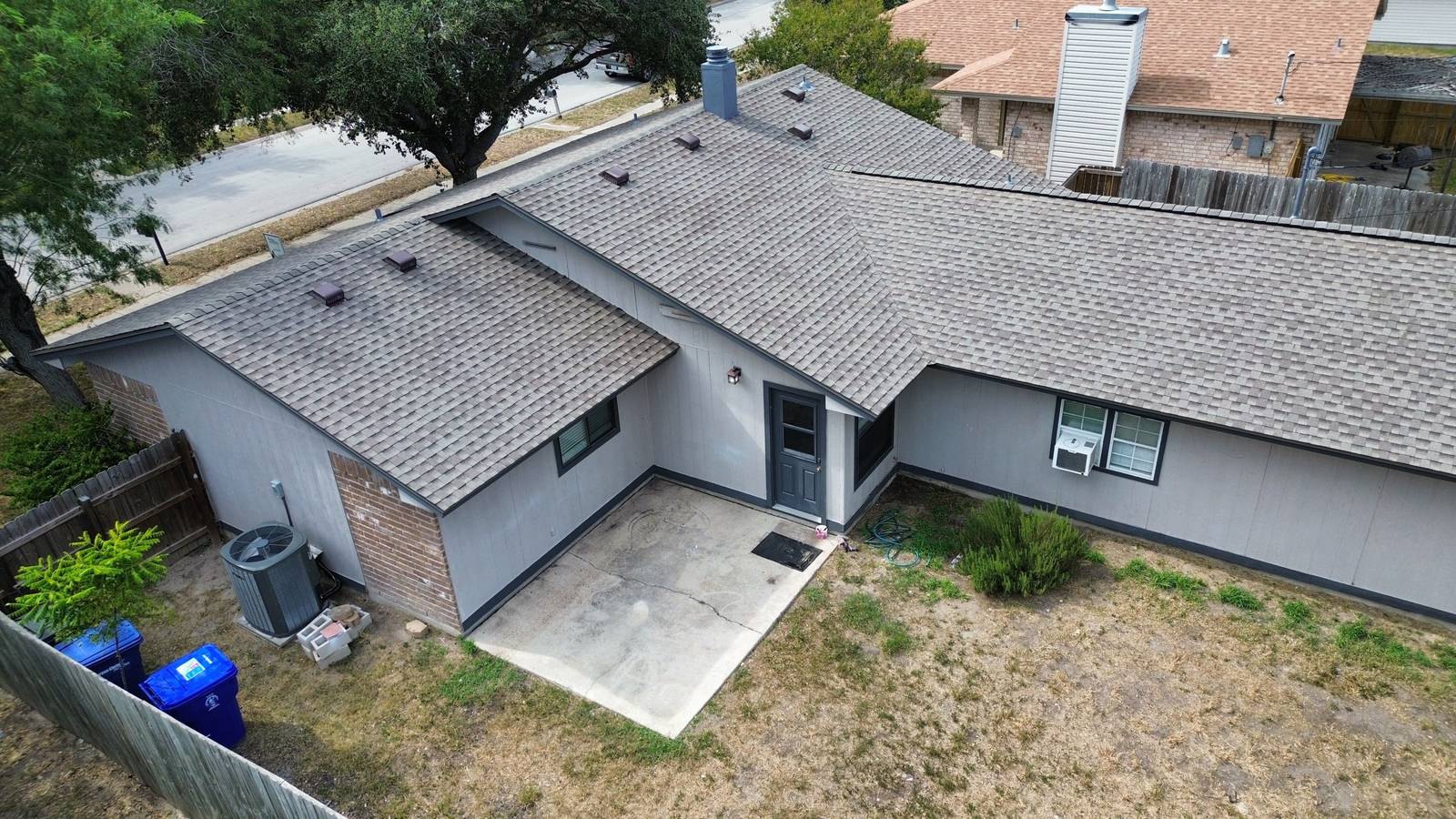
Recent Holmes Roofing jobs across San Antonio — Stone Oak, Westover Forest, north-central (78232), far-west (78245), and northwest (78255). Real work, photographed on site (not stock):

Holmes Roofing & Exterior Solutions yard sign in front of a completed roof replacement in the Stone Oak area of San Antonio, TX, July 2025
Job complete in Stone Oak (78260) — July 2025.
Holmes Roofing crew member in branded shirt installing architectural shingles over synthetic underlayment in Stone Oak, San Antonio, TX, July 2025
Our crew laying architectural shingle over fresh underlayment, Stone Oak — July 2025.
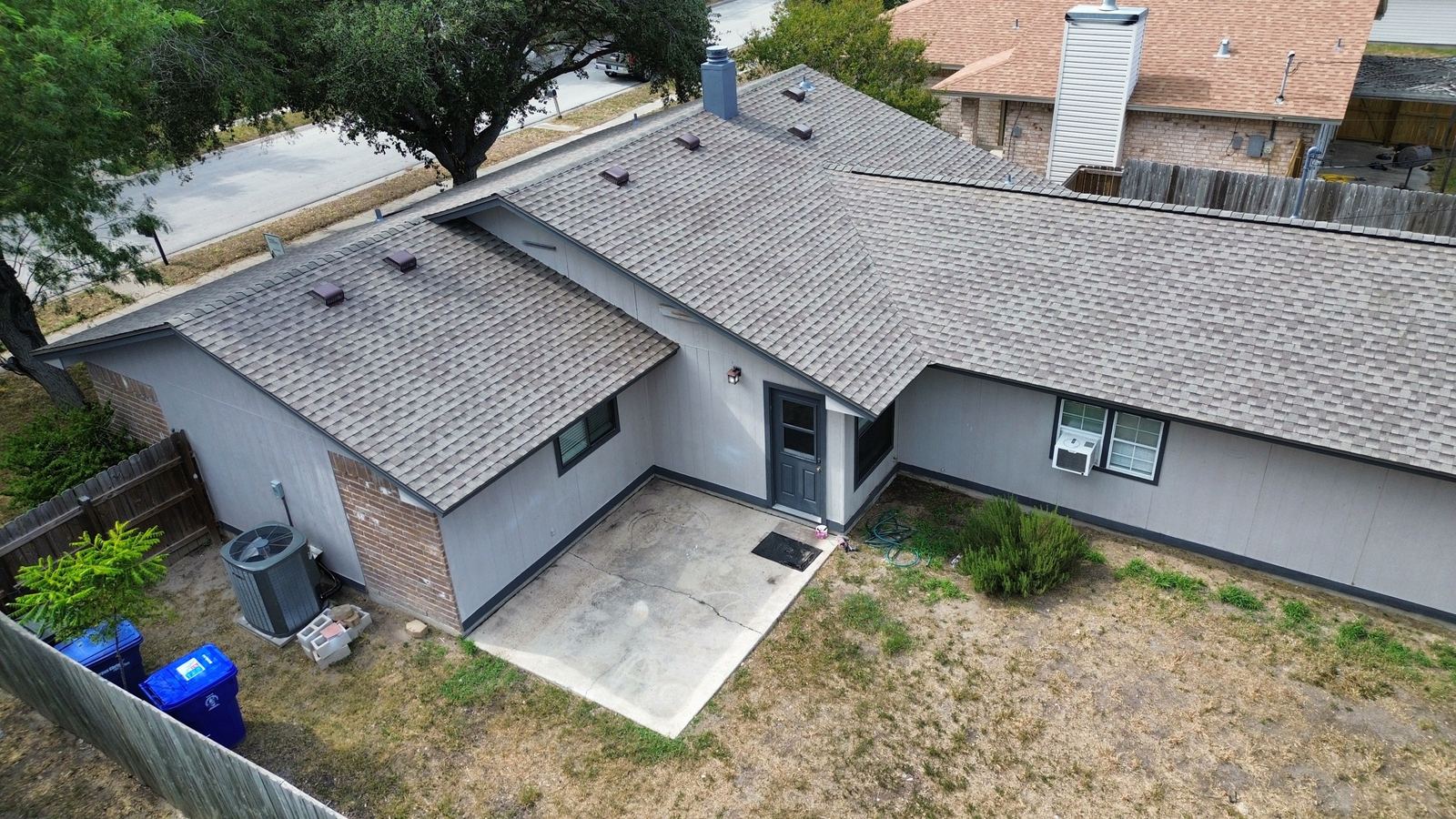
Drone aerial of a completed shingle roof replacement on a pool home in north-central San Antonio, TX (78232), August 2025
Completed replacement in north-central San Antonio (78232) — August 2025.
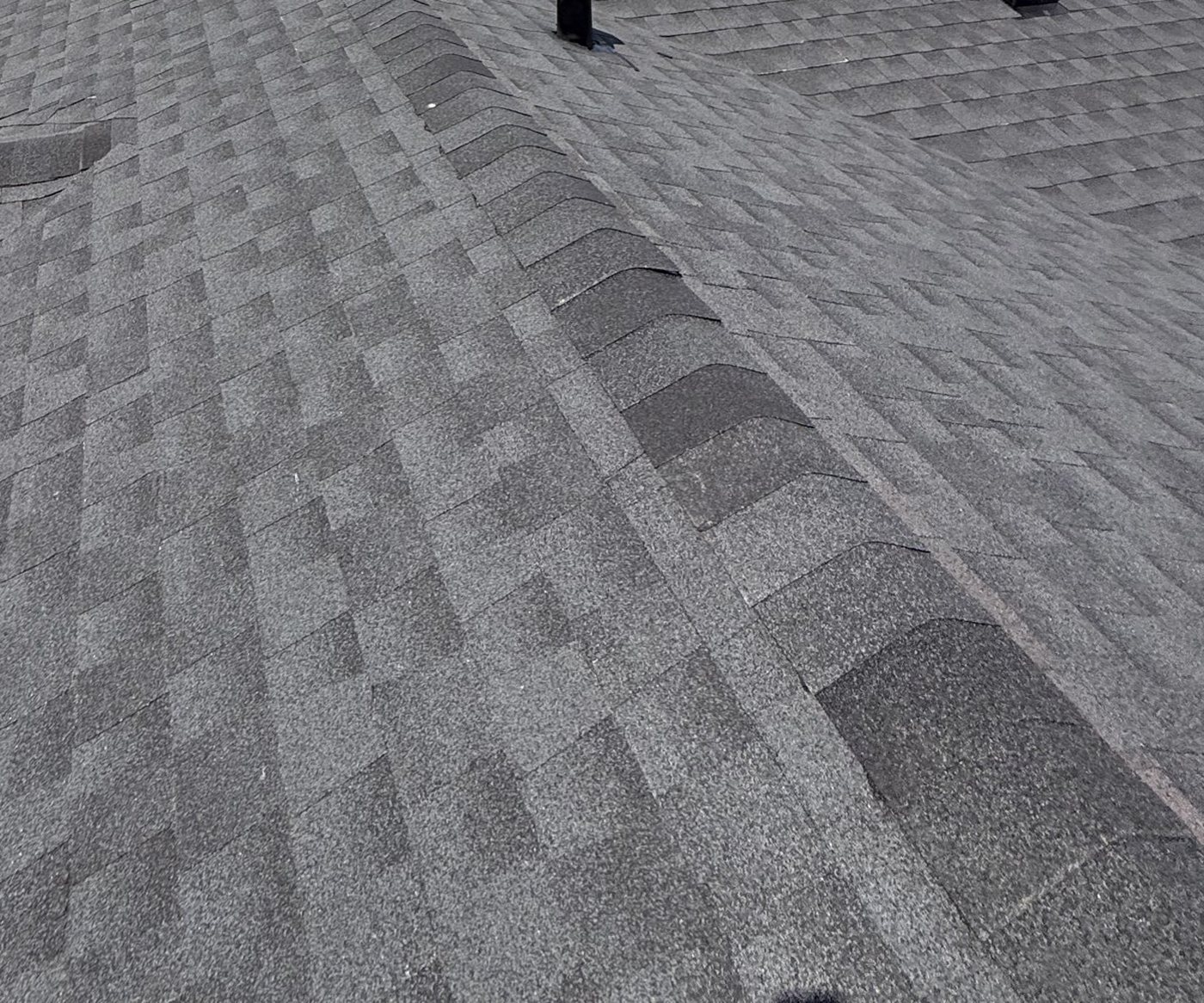
Completed charcoal architectural shingle roof on a red-brick home in Westover Forest, west San Antonio, TX, June 2025
Charcoal architectural shingle on a Westover Forest brick home (78251) — June 2025.
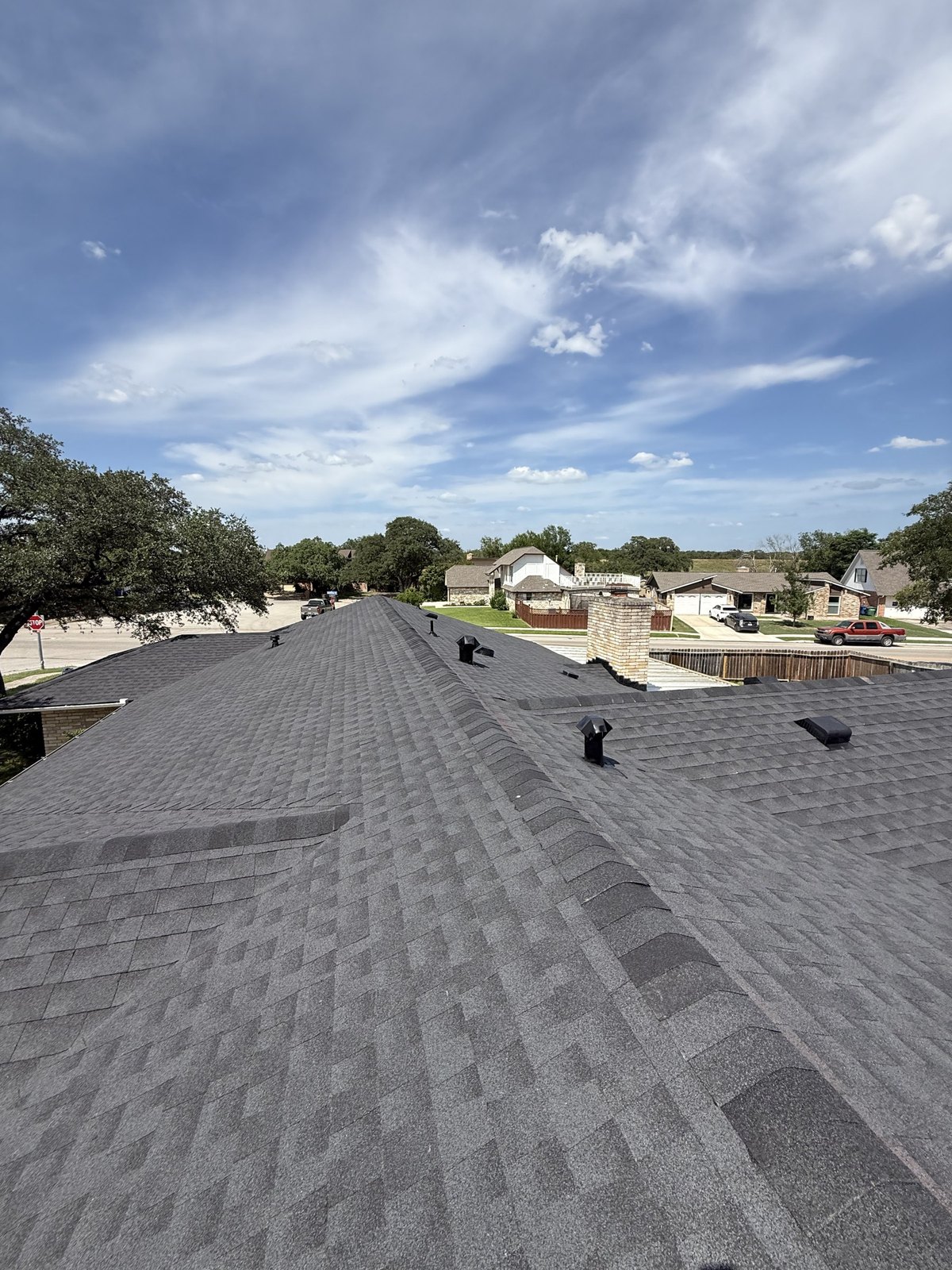
Drone view of a completed roof replacement on a two-story home in far-west San Antonio, TX (78245), July 2025
Two-story replacement, far-west San Antonio (78245) — July 2025.
Top-down drone view of a completed brown architectural shingle roof with skylight in Stone Oak, San Antonio, TX, July 2025
Top-down view of a finished Stone Oak roof — July 2025.
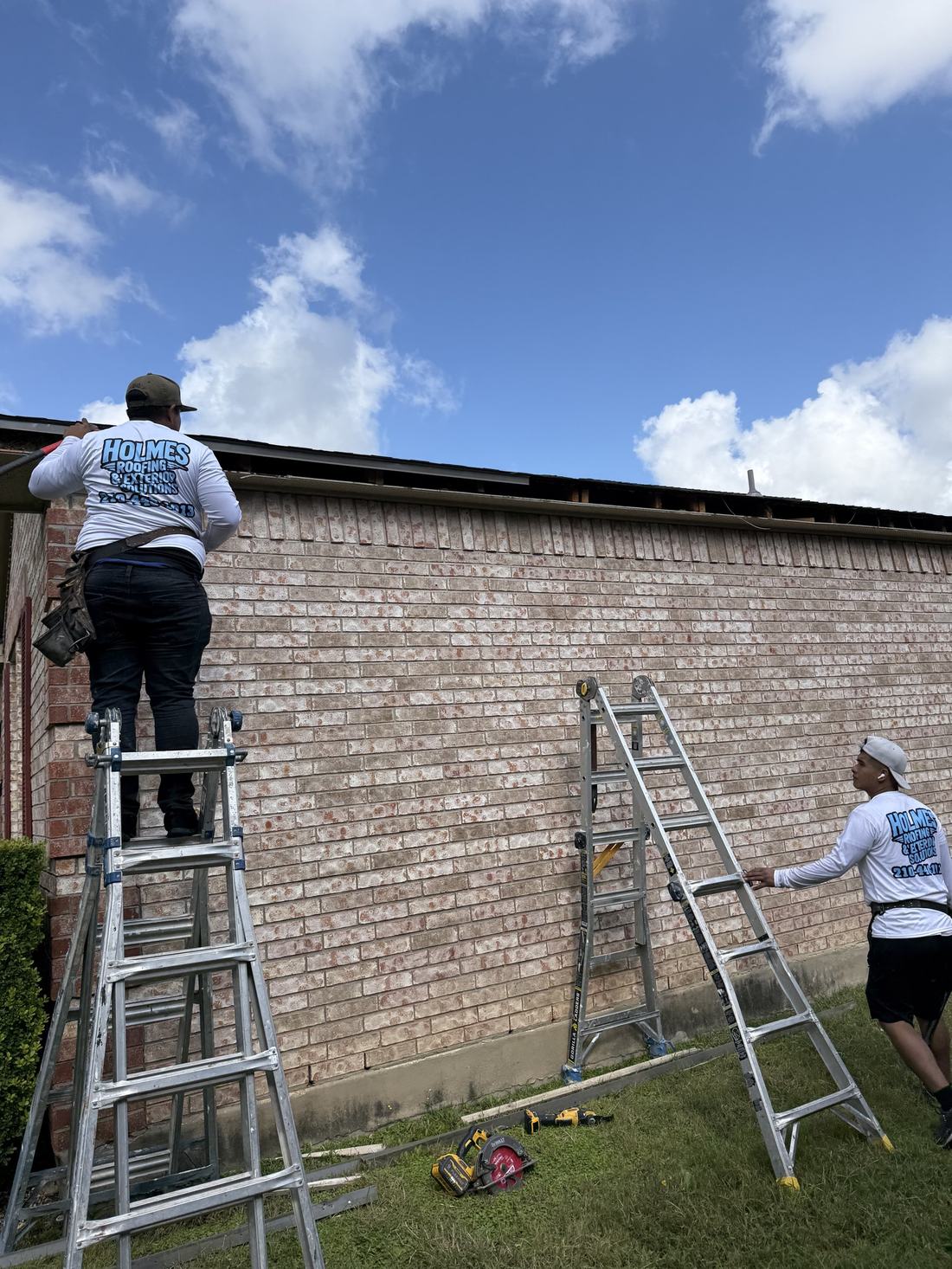
Holmes Roofing crew working at the gutter line of a single-story brick home in northwest San Antonio, TX, September 2025
Gutter and roofline work, northwest San Antonio (78255) — September 2025.

Want to see completed jobs near your address? Ask during your free inspection.

Call Now