Hail Season: Peaks March – June
Hail & Storm Damage Repair
South Texas hail can strip granules and crack shingles without leaving an obvious sign from the ground. Our free inspection documents exactly what a storm left behind.
South Texas hail can strip granules and crack shingles without leaving an obvious sign from the ground. Our free inspection documents exactly what a storm left behind.
Hail impact bruises and strips granules from asphalt shingles, cracks tile, and dents metal panels — damage that’s often invisible from the ground but weakens the roof’s ability to keep water out. South Texas hail season peaks March through June and can stretch into August.
Storm or hail damage often qualifies for an insurance claim — our free inspection documents exactly what you’ve got, with photos, in writing. We only document; we never file or negotiate a claim on your behalf. That part is between you and your insurance company.
Get My Free Hail Inspection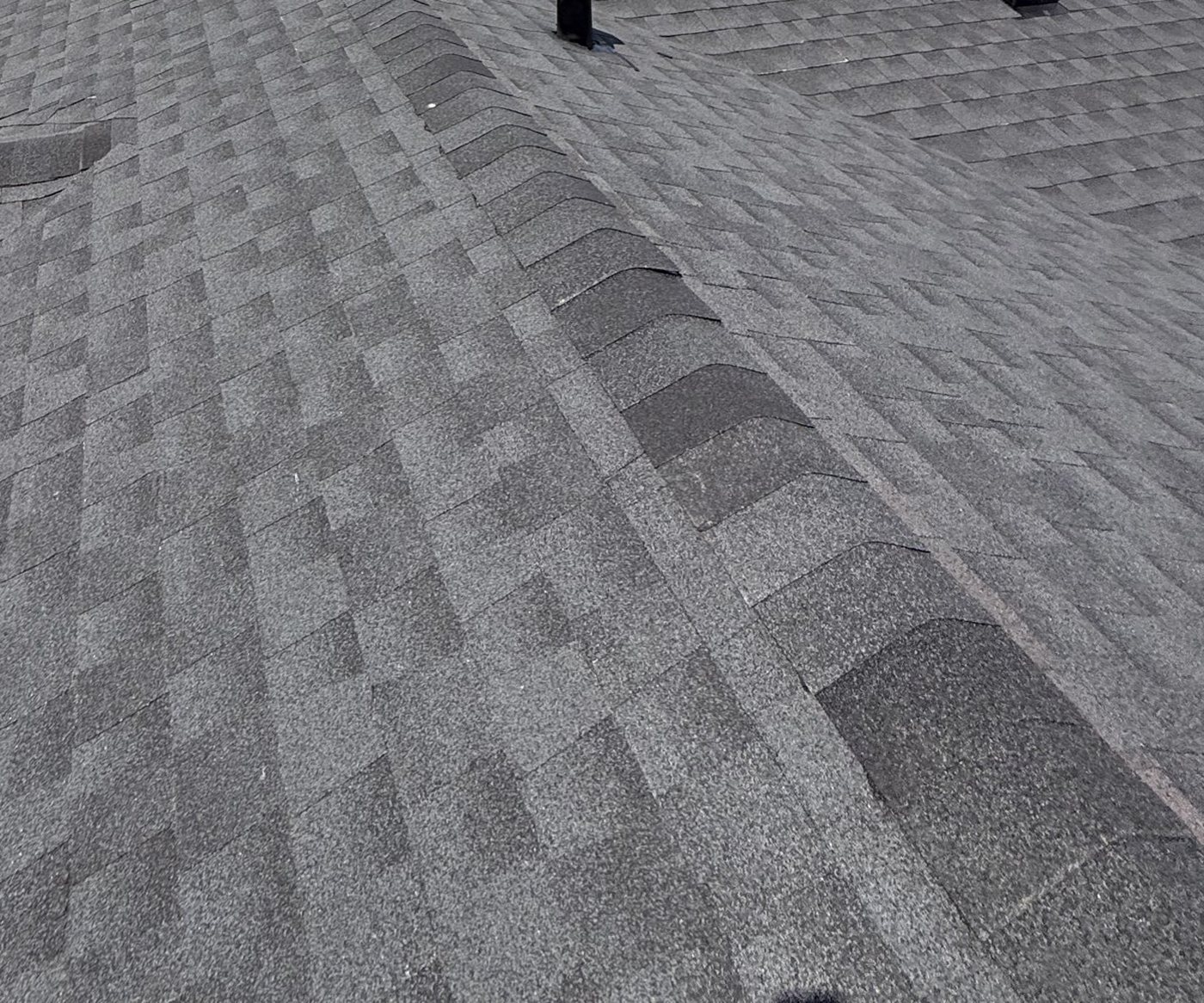
Impact spots that strip the protective granule layer or leave soft, bruised circles on asphalt shingles — easy to miss from street level.
Hail and wind together can crack shingles or lift their seal, opening a path for water on the next rain even if nothing looks obviously broken.
Repair Options →Bent or displaced flashing around chimneys and vents is a common storm casualty and a common hidden leak source afterward.
Leak Repair →Hail doesn’t damage every roof system the same way, which is why our inspection is tailored to your specific roof rather than a generic checklist:
Whatever your roof is made of, see our full roof types page for repair and replacement options specific to that system.
We would rather hand you the weather record than tell you the sky is falling. Everything below is a National Weather Service report, not a Holmes estimate.
| Date | Largest reported hail near San Antonio | Report location |
|---|---|---|
| 2021-05-03 | 4.50″ | Martinez |
| 2021-05-03 | 3.00″ | San Antonio |
| 2021-05-03 | 2.75″ | Brooks Afb |
Across 2020–2026 there are 95 hail reports logged within ten miles of the city centre, in six separate years — 38 of them at 1.5″ or larger and 16 at 2″ or larger. Source: NOAA National Centers for Environmental Information, Storm Events Database (hail reports, 2020–2026). Reports are point observations logged by spotters and trained observers, so they show where hail was recorded — not the full footprint of any storm, and not a substitute for looking at your own roof. NOAA also revises recent months, so the last stretch of any year tends to undercount.
The National Weather Service logged hail across eastern and northeastern Bexar County on the night of Friday, September 11, 2026. Reports put stones in the 2 to 2.5 inch range in Converse between roughly 10:00 and 10:20 p.m., and trained spotters and broadcast media reported 1 to 1.5 inch hail near Kirby, Saint Hedwig and China Grove. Source: NOAA Storm Prediction Center local storm reports, filed by the National Weather Service Austin/San Antonio office; the Converse location and timing are radar-estimated in the report itself. If your house sits in that corridor and nobody has been on the roof since, that is the one worth booking.
Hail almost never arrives on a calm day. The storm dropping stones is usually pushing wind too, and wind damage on an asphalt roof is the easiest finding in this trade to miss from a driveway.
Shingles are held down twice: by the nails, and by a strip of adhesive on the shingle beneath that seals each tab flat. Haag Engineering, published through IIBEC, ran full-scale wind-simulator testing on asphalt composition shingles at speeds up to 175 mph. Their finding, in their own words, is that any time a seal strip is violated, wind will be sufficient to fold the tab back to cause a “creased, folded or missing shingle.” After those tests, at a minimum, creases were present — and on newer, still-pliable shingles those creases “required very close inspection and tactile manipulation (hand pressure from underneath)” to detect at all.
A hail strike can fracture the mat inside a shingle without taking much granule off the top. It feels soft underfoot, like a bruise on fruit. So the two findings that matter most after a South Texas storm — the wind crease and the hail bruise — are both tactile. They are found by hand, up there. Not by eye from below, not from a drone pass, and not from a photograph taken standing in the yard.
A bruised or unsealed shingle is not yet a hole in your roof. It is a weakness waiting on water. The storm itself may put nothing through the ceiling at all; the leak arrives with a later rain, occasionally a month later, landing on the spot the hail already opened up. Homeowners reasonably blame the rain they can see falling. The damage was done by the storm they have already stopped thinking about.
We will not put a percentage on how often hail damage goes undetected. There are figures circulating in this industry about hidden storm damage that we chased back to their sources and could not find one, so we do not print them. The mechanism above is documented engineering, and that is what our inspection is built on.
There is no honest flat price for hail repair — two houses on the same street, hit by the same storm, routinely need very different work. What we can tell you before anyone climbs a ladder is what the first step costs: the inspection and the written quote are free, and we do not price hail damage sight-unseen. Once we have walked your roof, you keep the written, photo-documented report covering everything the inspection turned up. Four things move that number more than anything else.
A few bruised shingles on one slope is a different job from impact across every elevation. Hail is directional — the inspection maps which slopes actually took the hit, not just the one visible from the driveway.
Asphalt shingle, tile and metal each take hail differently and each repair differently. Material cost, availability and how much of a section has to come off to make a clean repair all shift with the system you have.
The single biggest swing in the number is whether the roof can be spot-repaired or has reached the point where replacement is the better call. If replacement is on the table, our roof replacement cost factors page walks through what drives that side.
Decking and underlayment condition is only fully visible once damaged sections are opened up. Sound decking keeps the job tight; soft or rotted decking has to be replaced before new material goes down, and that shows up in the scope.
Storm or hail damage often qualifies for an insurance claim, and your written report gives you a dated, photographed record of exactly what we found. We only document; we never file or negotiate a claim on your behalf. Your policy — not state law — sets the terms that matter, so read it and talk to your carrier directly. If you are paying out of pocket, Holmes also offers flexible financing through Synchrony.
Hail-cracked seals and lifted shingles don’t always leak on day one — but the next hard rain can find that opening. Getting a documented inspection quickly does two things: it protects the rest of your roof from a small problem becoming a bigger one, and it gives you a dated, photographed record of the damage while it’s fresh, which matters if you do talk to your insurance company. We respond and coordinate an inspection within 24 hours of your call, with same-day roof checks and tarp-in-24 emergency service if water is already getting in.
There is no flat price — cost depends on how far the damage spreads, your roof material, whether the roof can be repaired or needs replacing, and the condition of the decking underneath. What is fixed is the first step: the inspection and the written quote are free, and we do not price hail damage sight-unseen. You keep the written, photo-documented report from the inspection.
Yes — the roof inspection plus your written report cost you nothing, with no obligation to hire us. You get photos of what we found, what is damaged, what is fine, and what we would recommend, and you are free to take that report anywhere.
Granule loss, bruised or cracked shingles, and dented metal or vent caps are the usual signs — but a lot of hail damage isn’t visible without getting up on the roof. A free inspection is the only reliable way to know.
Storm or hail damage often qualifies for a claim — our free inspection documents exactly what you’ve got. We only document; we never file or negotiate a claim on your behalf. Your policy sets the terms that matter — read it and talk to your carrier directly.
We walk the roof top to bottom, photograph anything we find, and give you a written report — what’s damaged, what’s fine, and what we’d recommend, no pressure either way.
A cracked or lifted shingle that looks minor today can let water in on the next rain. Getting ahead of it with a documented inspection protects the rest of the roof and gives you a paper trail if you do file a claim.
Asphalt shingles bruise and lose their protective granule layer; tile can chip or crack on direct impact; metal panels can dent. Each material shows damage differently, which is why the inspection looks at your specific roof type rather than a generic checklist.
Stay off the roof yourself, photograph any obvious damage from the ground if it’s safe to do so, and call us. We respond and coordinate an inspection within 24 hours, with same-day roof checks and tarp-in-24 emergency service if a leak has already started.
Joshua Holmes brings 20+ years of roofing experience to reading storm damage accurately, Holmes is GAF Certified and City of San Antonio registered (HIC-24-00928), and every inspection is documented in writing — not a verbal guess.
The same free, documented inspection on its own — no storm required.
Roof Inspections →Wind-lifted shingles, torn flashing and fallen-limb strikes after a San Antonio storm — documented the same way.
Storm & Wind Damage →When storm damage is widespread enough that replacement is the honest answer.
Roof Replacement →Each of our main service-area cities has its own page with the local storm record and the nearby towns we serve.