San Antonio Metro Roofing & Exteriors
Live Oak, TX Roofing and Exterior Services
Roofing, siding, and gutter work backed by a real workmanship warranty, with Joshua Holmes personally overseeing the job.
Roofing, siding, and gutter work backed by a real workmanship warranty, with Joshua Holmes personally overseeing the job.
Live Oak is part of our regular San Antonio-metro service area, on the northeast side of the San Antonio metro. Our Selma shop is about 3 miles from here. That is a short enough run that scheduling is a matter of days, not weeks.
Homeowners here reach us the same way everyone else does — a call, then a free inspection scheduled inside 24 hours. What comes back is a written report with photographs, not a verbal estimate shouted down from a ladder.
The warranty is deliberately boring: fifteen years of workmanship coverage on shingle, twenty on metal, and a free annual inspection every year for up to a decade so nothing quietly goes wrong between now and then.
Schedule My Inspection
Listed nearest first — Universal City is the closest of these to Live Oak, about 2 miles away.
Geography and county lines from the U.S. Census Bureau; hail counts from NOAA’s Storm Events Database. We would rather publish four facts we can source than a page of local color we cannot.
Live Oak sits in Bexar County. It lies roughly 3 miles southwest of our Selma home base.
An incorporated city in Bexar County. Permit rules are set locally and they change, so we confirm the current requirement for your job rather than working from memory.
NOAA National Centers for Environmental Information, Storm Events Database (hail reports, 2020–2026) lists 42 hail reports within about ten miles of Live Oak across 6 of the last seven years, 11 of them an inch and a half or larger. The largest measured 2.00 inches.
Siding repair and replacement handled by the same crew that does the roof — so the transitions at the roofline actually line up.
Siding Options →The inspection is free whether it ends in work or not — buying, selling, or just after a bad night of weather.
What We Check →Tear-off, decking check, new underlayment, and the shingle tier you pick — under a 15-year workmanship warranty, 20 on metal.
Replacement Options →Storm or hail damage often qualifies for an insurance claim. Our inspection documents what is there, in writing, so you have the evidence in hand.
Storm Damage Help →Leaks usually start at a detail rather than out in the open field of a roof — flashing, a boot, a few damaged courses. We trace the actual source instead of blanketing the roof in sealant.
Repair Details →The damage that matters after a storm is rarely the damage you can see from the driveway. Granule loss, split shingles, and dented flashing all read as a normal-looking roof from below.
For Live Oak specifically: The federal storm record lists 42 hail reports inside a ten-mile radius around Live Oak across 6 of the last seven years, 11 of them an inch and a half or larger. The largest measured 2.00 inches. Those are reported events near the city, not damage estimates for any particular house — only getting on your roof answers that.
Storm or hail damage often qualifies for an insurance claim. Our part is the roofing part: we document what we find in a written, photographed report and give you our repair estimate. We are not public adjusters and we do not represent you to your insurer — the claim itself stays yours.
Get My Free Inspection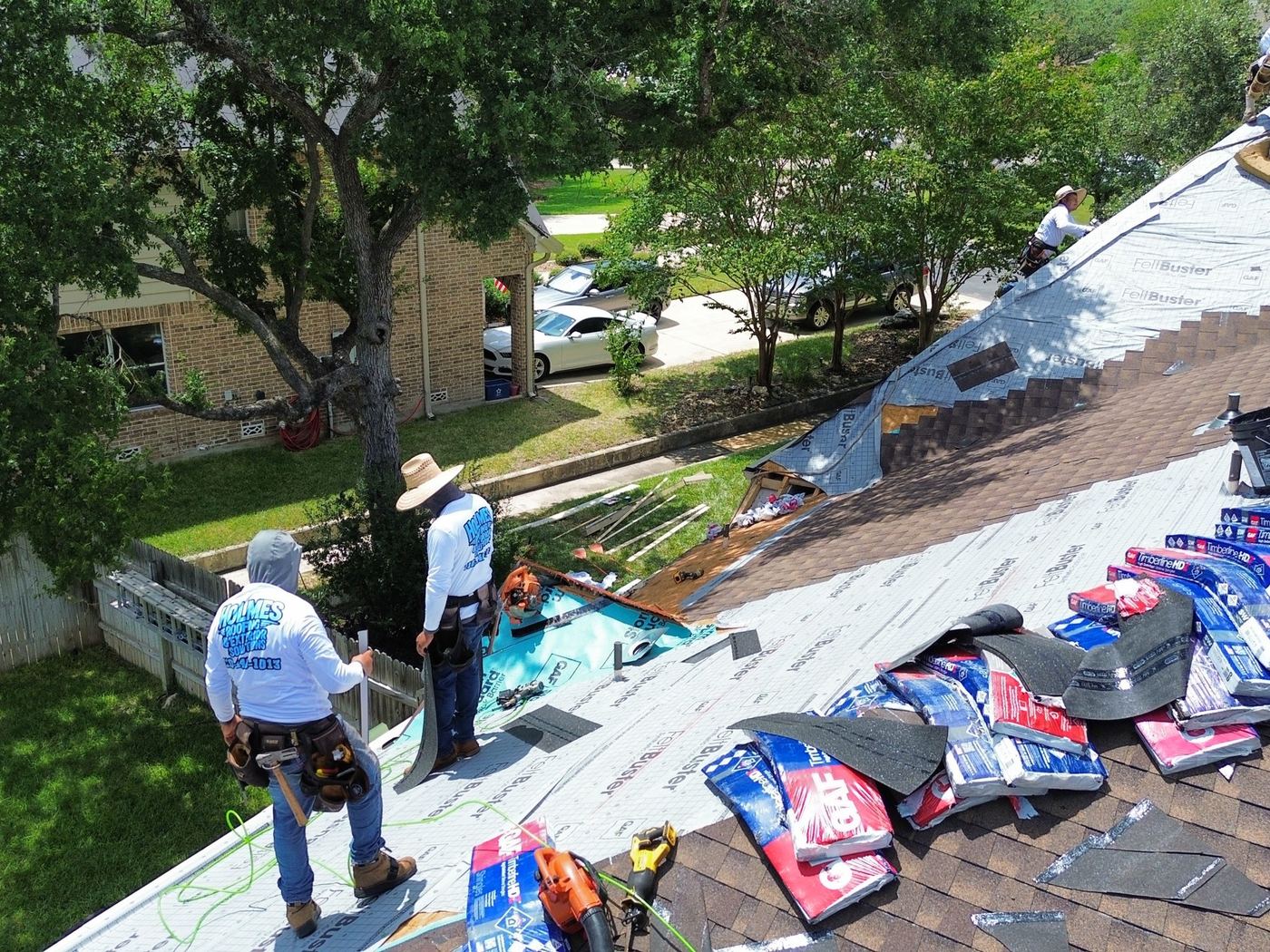
Findings, scope, and price all arrive in writing with photographs attached — nothing important gets left as a handshake.
Honesty is the foundation of trust, so we never upsell unnecessary services or push products. If the roof can wait, we say the roof can wait.
Joshua Holmes personally oversees every job, bringing 20+ years of roofing and contracting experience to the inspection.
Synchrony financing is available for larger projects — ask about payment plans during your inspection.
Rated 5.0 on Google — read what neighbors are saying before you book.
GAF Certified Contractor — a manufacturer-recognized certification, renewed 2026.
Answers from Joshua Holmes, Owner — 20+ years in roofing and contracting.
Public storm records log 42 hail reports in the immediate Live Oak area across 6 of the last seven years, 11 of them an inch and a half or larger. The largest measured 2.00 inches. That is the public record for the area, and it is the reason we treat a post-storm inspection as routine here rather than optional.
Live Oak sits in Bexar County. From the Selma shop it is a 3-mile run.
Yes — the roofing side of a chimney: flashing, crown and cap work, and the siding on a chimney chase.
It depends on size, material, and weather. You get a specific timeline in the written estimate, before any work begins.
We respond and coordinate an inspection within 24 hours, and we will do a same-day check when conditions make it urgent.
You hear about it before it gets covered up. Bad decking gets photographed and priced as a change you approve, not discovered on the final invoice.
Often it is the details rather than the field of the roof — flashing, pipe boots, sealant that has gone brittle. Those are the ones worth catching while they are still the only problem.
It depends on material lead times and the weather more than on our calendar. You get a real start window in writing, not a vague promise.
Storm and hail damage often qualifies, but every policy differs. We document what we find with photos and a written report; the decision to file, and the claim itself, stay yours.
Joshua Holmes personally oversees every job. This is an owner-operated shop, so the person accountable for the recommendation is the person accountable for the work.
Yes. Flat, TPO, and modified-bitumen systems on commercial properties are an active part of the business, not a sideline.
Often, though a weathered roof and a fresh bundle rarely look identical, and we will tell you honestly when a patch is going to be visible from the street.