Castle Hills is 2.5 square miles of established residential character tucked into north-central San Antonio, straddling Loop 410 with roughly 1,900 homes and a population just under 4,000. Incorporated in 1951, this community has maintained its independent municipal identity for over seven decades — and the homes reflect that same permanence. Most of Castle Hills’ residential stock was built between the early 1950s and 1970s, which means many roofs in the city are on their second or third replacement cycle. We’re Holmes Roofing & Exterior Solutions, and we understand the specific challenges that come with maintaining roofs on homes that have 50 to 70 years of structural history underneath them.
Castle Hills homeowners tend to stay. This is not a transient suburb. People buy here for the mature tree canopy, the oversized lots, the mid-century character, and the proximity to Loop 410 and US-281. That means the homeowner we replace a roof for today is the same homeowner who will call us in 15 years when it is time to think about the next one. We operate accordingly.
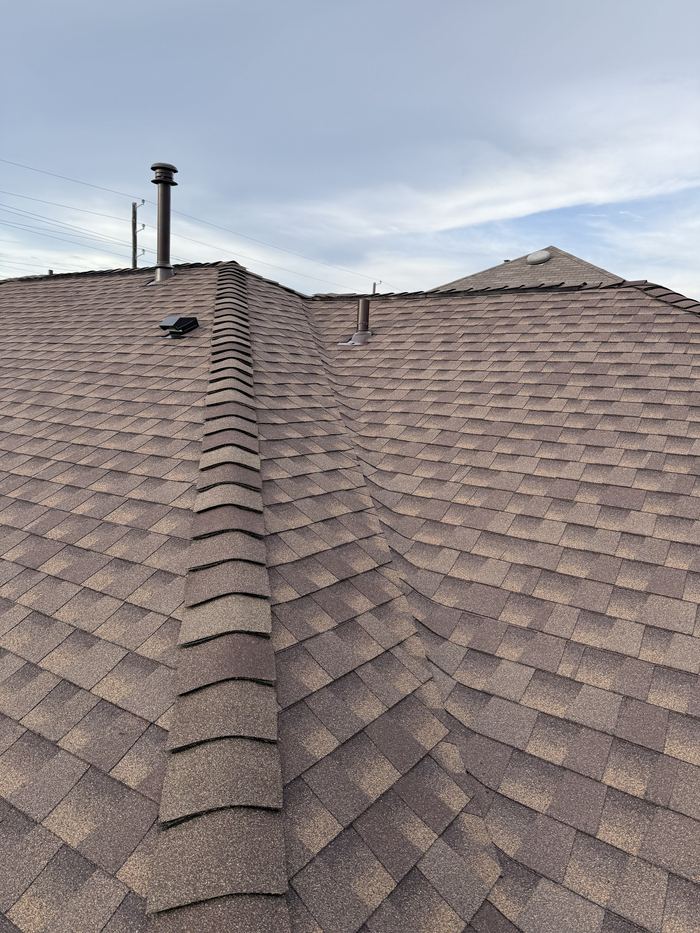
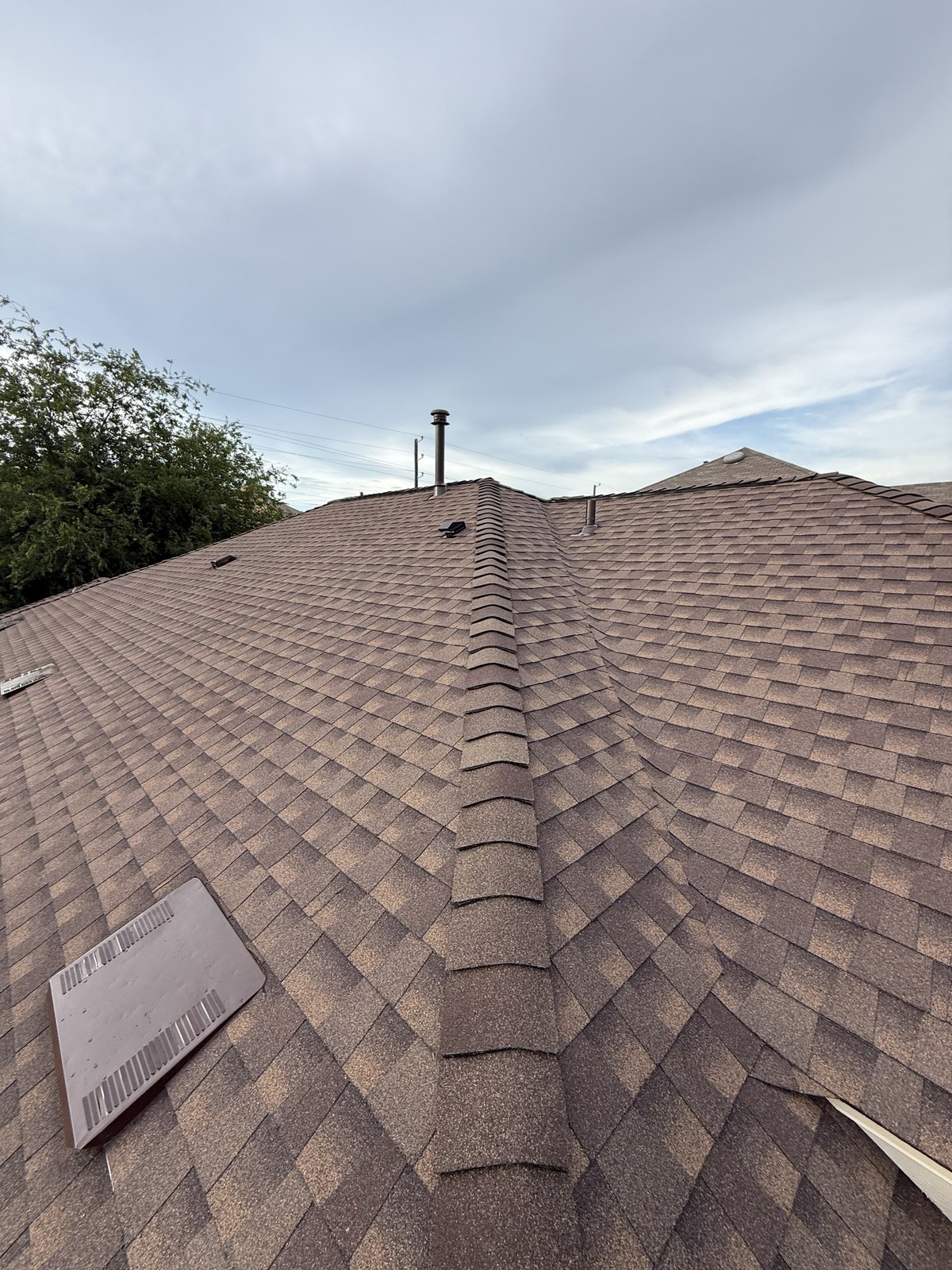
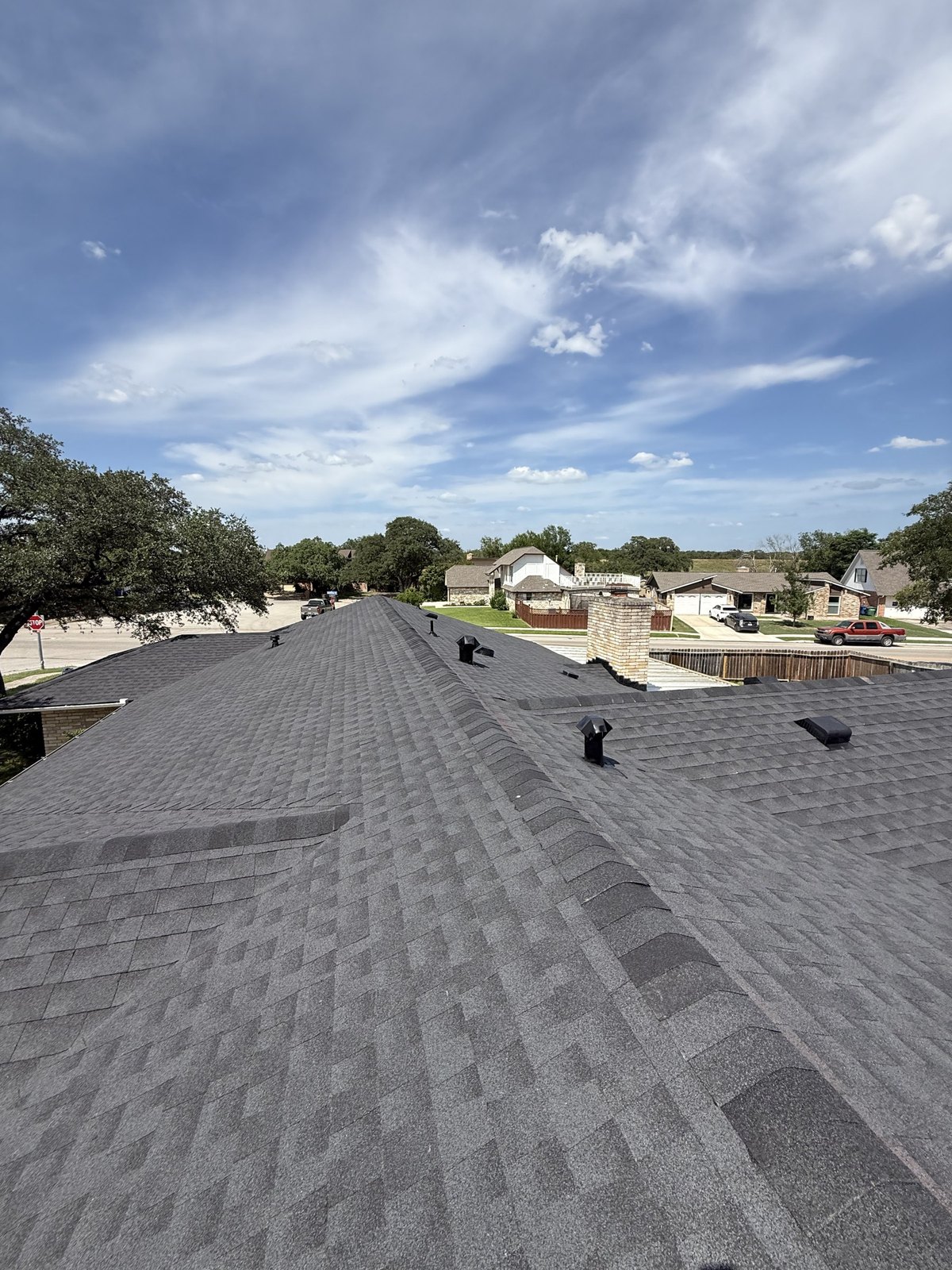
Roof Replacement — A full replacement on a 1950s or 1960s Castle Hills ranch home involves more than removing old shingles and nailing new ones. We are typically working with original plank decking or early-generation plywood that may have soft spots, nail fatigue, or moisture damage from decades of South Texas humidity. Every Castle Hills replacement starts with a full tear-off to inspect the deck, because what is underneath the shingles on a 70-year-old home matters more than what is on top of them. We replace compromised decking, upgrade ventilation to current code, and install new underlayment before the first shingle goes down.
Roof Repair — The most common repairs in Castle Hills involve aging flashing around chimneys and dormers, deteriorated pipe boot seals, and shingle damage from falling limbs in the heavily treed neighborhoods. Castle Hills’ mature pecan and live oak trees provide valuable shade, but branches rubbing against roof surfaces wear through granules and create entry points for water. We trace leaks to their actual source — which is often several feet from where the water appears inside the home — and repair the root cause.
Storm & Hail Damage — Castle Hills sits in the path of storm cells that track along the IH-10 and Loop 410 corridors. The city’s dense tree canopy can actually intensify wind damage by channeling gusts between homes and launching broken branches onto roof surfaces. After a significant storm, we offer free inspections for Castle Hills homeowners. We photograph all damage systematically for your insurance adjuster and handle the claim documentation process, including supplement negotiations when the initial estimate does not cover the full scope of necessary work.
Heard hail hitting the roof last night? Call (210) 440-1013 — free inspection, we will be there within a day or two.
Gutter Systems — Many original Castle Hills homes were built without gutters, or with galvanized steel gutters that have corroded after decades of exposure. The city’s documented drainage challenges — Castle Hills completed an $18 million drainage study across five watersheds to address chronic flooding in several areas — make proper water management at the individual home level even more important. We install seamless aluminum gutters with downspout placement designed to direct water away from foundations, which is critical given the expansive clay soil conditions in this part of Bexar County.
Siding & Exterior — Castle Hills’ mid-century homes often feature a mix of brick veneer, wood siding, and original aluminum or vinyl siding that has faded, cracked, or warped over the decades. Fiber cement (Hardie board) siding replacements restore the exterior appearance while eliminating the maintenance cycle of wood and the brittleness of aging vinyl. We match the original architectural proportions — the trim widths, the reveal dimensions, the corner details — so the replacement looks intentional rather than like a retrofit.
Castle Hills’ development history creates a distinct roofing landscape. The earliest homes date to the late 1940s and early 1950s when developers first recognized the appeal of the rolling terrain and the proximity to what would become the Loop 410 corridor. Construction continued steadily through the 1970s, with occasional infill and renovation projects continuing to the present day.
This means a roofing contractor working in Castle Hills encounters construction methods spanning three decades on a single block — from original plank-decked homes with minimal ventilation to later builds with plywood sheathing and ridge vents. Each generation of construction has its own failure modes, its own code compliance gaps, and its own material compatibility requirements.
Castle Hills Estates — One of the city’s original residential areas, dating to the early 1950s. Homes here sit on wide, expansive lots with mature landscaping. The mid-century modern styling that defines Castle Hills Estates means low-slope roof sections, large overhangs, and clerestory windows — all of which create specific roofing challenges. Low-slope areas require modified bitumen or similar low-slope membrane systems rather than standard asphalt shingles, which are only rated for slopes of 2:12 and above. We frequently see prior roofers who installed standard shingles on low-slope sections of Castle Hills Estates homes, leading to premature leaks. We correct this with appropriate materials for each roof plane.
Fox Hall Lane Area — This heavily treed section of Castle Hills features ranch-style homes under a dense canopy of mature trees. The tree cover is one of the most appealing features of the neighborhood, but it creates specific roofing maintenance demands. Leaf and branch debris accumulates in roof valleys and behind any vertical interruptions (dormers, chimneys, pipe boots), trapping moisture against the shingle surface. Moss and algae growth is more common here than in open-lot areas of the city because the canopy limits UV exposure and keeps surfaces damp longer after rain. We recommend algae-resistant shingle lines for Fox Hall Lane replacements and annual maintenance inspections to clear debris from vulnerable areas.
Northern Castle Hills (near Loop 410) — Homes closer to Loop 410 tend to be from the 1960s and 1970s, with slightly different construction characteristics than the earlier-built southern sections. These homes are more likely to have original three-tab shingles (if never re-roofed) or single-layer overlays from the 1990s. The proximity to Loop 410 also means slightly higher ambient noise and air quality considerations — not a roofing factor per se, but homeowners in this area tend to prioritize upgrades that improve both the building envelope and interior comfort, including upgraded underlayment with sound-dampening properties.
Lemonwood Drive / Central Castle Hills — The civic heart of Castle Hills, with the municipal building, fire station, and Castle Hills Commons nearby. Homes in this area tend to be well-maintained, and roofing projects here have high visibility because of the foot and vehicle traffic on the adjacent streets. We schedule material staging and debris removal to minimize disruption to the neighborhood, and we complete work on a compressed timeline when the project is on a prominent lot.
Castle Hills has invested significantly in addressing drainage challenges across five identified watersheds within the city. When storm water is not properly managed at the roof and gutter level, it compounds the larger drainage issues the city is working to resolve. Proper gutter installation with appropriate downspout routing is not optional in Castle Hills — it is part of being a responsible homeowner in a community actively managing its water infrastructure. We design gutter systems that work with the city’s drainage patterns rather than contributing to the problem.
The expansive clay soils under most of Castle Hills expand when wet and contract when dry, and this cycle can cause foundation movement that affects roof geometry over time. We inspect roof planes for signs of structural settling — uneven ridge lines, gaps at wall-to-roof transitions, and cracked or displaced flashing — as part of every assessment. If we find evidence of foundation-related movement, we recommend addressing the foundation issue before investing in a new roof, because a new roof installed on a moving structure will develop problems prematurely.
Castle Hills’ mature tree canopy provides meaningful shade coverage on many homes, which reduces the thermal cycling that degrades roofing materials. Shaded roofs in Castle Hills can last 2 to 4 years longer than identical materials installed on fully exposed homes in newer, treeless subdivisions. However, the canopy creates a tradeoff: the shade benefit is offset by moisture retention, organic debris accumulation, and the physical damage from branches during storms.
For Castle Hills homes with significant canopy coverage, we select shingle lines with enhanced algae resistance and recommend a maintenance schedule that includes annual debris clearing from valleys, behind dormers, and around penetrations. For homes on corner lots or street-facing elevations with less tree cover, we recommend high-reflectivity shingles that reduce surface temperature by up to 20 degrees and lower attic heat loading during the five months of sustained temperatures above 95 degrees that San Antonio experiences annually.
Mid-century home expertise. Castle Hills’ 1950s and 1960s construction requires a contractor who understands plank decking, original ventilation limitations, low-slope roof sections, and the structural nuances of homes built before modern building codes. We inspect and address these issues during every replacement rather than simply re-shingling over existing problems.
GAF-certified installation. Our GAF certification means your shingle installation follows manufacturer specifications exactly, which qualifies you for enhanced warranty coverage — including labor — that non-certified installers cannot offer.
Insurance claim management. We handle the documentation, adjuster coordination, and supplement process for storm damage claims. For Castle Hills homeowners with older roofs, we distinguish between pre-existing wear and storm-caused damage in our documentation so that the claim accurately reflects what the storm did.
Local, owner-operated. Joshua Holmes oversees Castle Hills projects personally. In a community of 1,900 homes where neighbors know each other, our work is visible and our reputation travels by word of mouth. We do not cut corners on homes where the next referral lives across the street.
Ready to talk about your Castle Hills roof? Call (210) 440-1013 for a free inspection and estimate.
Answers by Joshua Holmes, Owner — Holmes Roofing & Exterior Solutions, Selma, TX.
Do I need a permit to re-roof in Castle Hills?
For a full roof replacement, yes — Castle Hills requires permits for many residential projects, and you can reach the city’s Permits Clerk at 210-293-9675. Worth knowing: the city specifically exempts routine maintenance and *minor* roof repairs from permitting. We’ll tell you straight whether your job is a permitted replacement or a minor repair that doesn’t need one, and we pull the permit when it’s required.
What counts as a ‘minor repair’ that doesn’t need a permit?
Castle Hills lists minor roof repairs among the routine-maintenance items that don’t require a permit (similar to exterior painting and asphalt-driveway repair). A few replaced shingles after a windy day is different from a full tear-off. If there’s any question, we err toward checking with the city — an unpermitted full replacement can cause problems at resale.
How fast should I act after a hailstorm?
Within 7–14 days for the inspection. Texas was the #1 state in the country for hail events (1,123 statewide in 2023, per the Insurance Information Institute), and Castle Hills shares the surrounding San Antonio hail exposure. Documenting damage early keeps your claim defensible. Inspections are free.
Will you handle the insurance side?
Yes. We photograph damage to adjuster standards, meet the adjuster on site, and handle supplements when the first scope misses code items. You work with us; we manage the carrier paperwork.
Is the estimate free?
Always. Call (210) 440-1013 for a free, no-obligation inspection — we’re a short drive away and can usually be out within a day or two.