The Best Siding Replacement In San Antonio, TX
We're siding with you for a beautiful home exterior!
Siding Replacement and Repair in San Antonio, TX
Holmes Roofing & Exterior Solutions installs and replaces siding for San Antonio metro homeowners from our home base in Selma, TX. We are a GAF-certified, family-owned local crew — licensed with the City of San Antonio (HIC-24-00928), insured, and rated 5.0 stars on Google. Siding is the primary shield between your home’s structure and South Texas weather: triple-digit summer heat, intense UV radiation, Gulf moisture, and severe storms that can batter a house for hours at a time. Damaged or aging siding compromises insulation, invites pest entry, and lets moisture into the walls where it causes rot and mold. We provide a free inspection, walk you through your material options and what each choice involves, and give you a written quote before any work begins. Financing is available through our Synchrony Financial partnership. Call (210) 440-1013, Monday-Saturday 9am-6pm, to schedule.
What does siding actually do for your home?
Siding does three things at once: it protects your home’s structure from weather and pests, it wraps the insulation that keeps your energy bills in check, and it drives the visual first impression your home makes on the street. On the weather side, quality siding keeps wind-driven rain from reaching your sheathing, blocks UV degradation, and helps your HVAC system from fighting a losing battle against triple-digit South Texas summers. On the pest side, solid continuous siding closes the gaps that termites and woodpeckers exploit — termites that eat structural wood and woodpeckers that drill nesting holes can compromise your home’s integrity before you notice a problem. On the energy side, siding locks in the insulation layer that regulates indoor temperature, and a failing siding system can add meaningfully to heating and cooling costs year-round. Getting the right material installed correctly is what makes the difference between siding that protects for decades and siding that starts failing in ten years.
What are the signs my siding needs replacement or repair?
The most common signals that siding is failing are visible cracking, warping, or buckling boards; mold and mildew growth that returns after cleaning; discoloration, fading, or paint that bubbles and blisters; and moisture-related wood rot at seams or around windows and doors. Interior signs matter too — if you notice higher utility bills, cold spots near exterior walls, or water staining inside your home, damaged siding is a likely cause. Siding materials have different lifespans: wood siding may need replacement after 20-30 years, while fiber cement and vinyl can last 30-50 years with proper maintenance. Age alone is not the deciding factor; condition is. If boards are badly damaged, the underlying sheathing is wet, or more than a small section of the run needs replacing, full replacement usually makes more economic sense than ongoing patchwork repairs. Holmes evaluates the extent of the damage during a free inspection and gives you a straight recommendation.
What siding materials are available, and what are the differences?
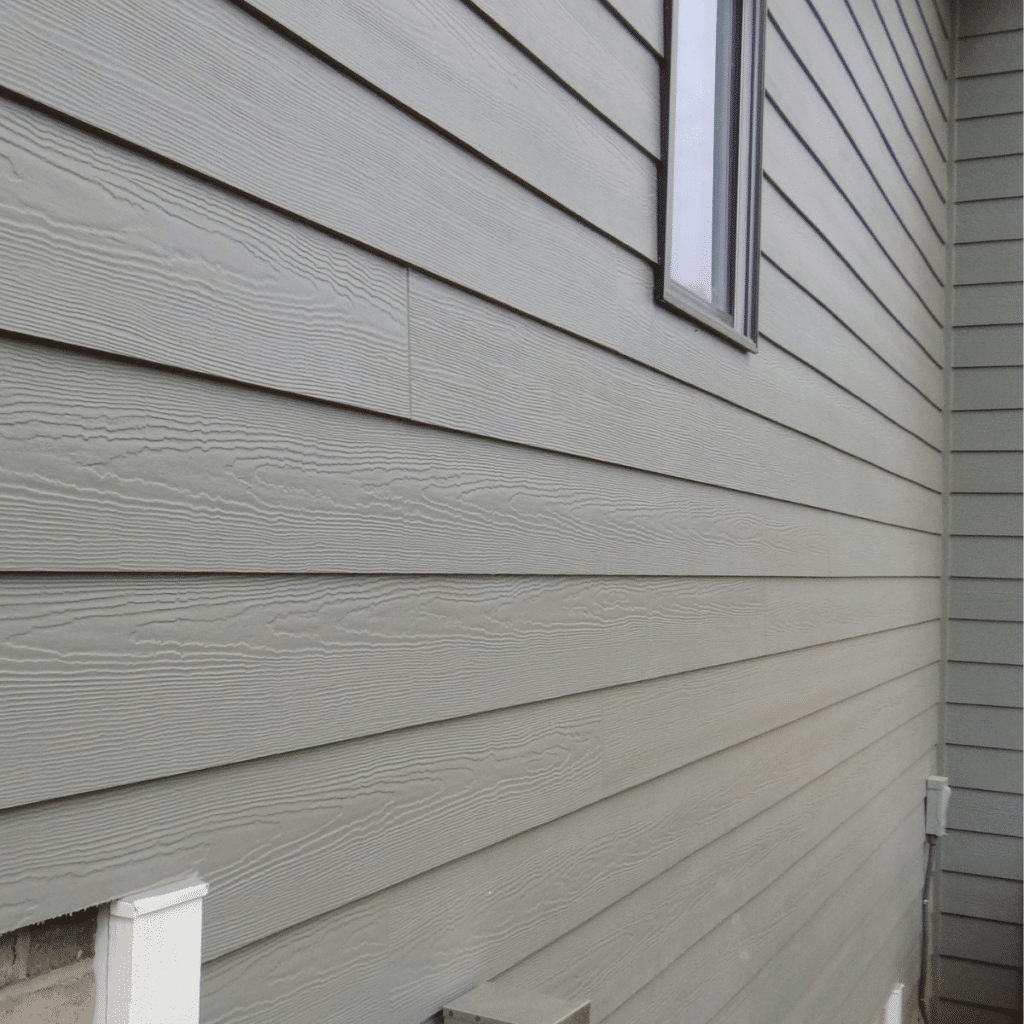
The most common residential siding materials in the San Antonio market are vinyl, fiber cement (James Hardie being the dominant brand), wood, and engineered wood composite. Vinyl is the most affordable option, low maintenance, and holds up well in heat, but it can become brittle over time and offers less design flexibility than other materials. Fiber cement is more durable, fire-resistant, and resistant to pests and moisture — it holds paint longer than wood and handles South Texas humidity better than vinyl at the higher end of the market. Wood siding offers the most natural aesthetic and can be painted or stained to any color, but it requires the most maintenance in a climate with intense UV and moisture cycles. Engineered wood composites split the difference — they mimic wood appearance with better resistance to moisture and insects. The best material for your home depends on your budget, your neighborhood’s aesthetic standards, how much maintenance you want to do, and whether your HOA has material or color restrictions. We walk you through the trade-offs on-site.
How much does siding replacement cost in San Antonio?
No verified market-standard price range for siding in the San Antonio area exists in our research, so we will not invent one. What we can tell you is that siding cost depends on four main factors: (1) material choice — vinyl sits at the lower end of the cost spectrum, fiber cement in the middle, and premium wood or specialty materials at the higher end; (2) home size and complexity — wall area, number of stories, dormers or bay windows, and whether old siding needs removal and disposal; (3) condition of the underlying sheathing — if moisture has damaged sheathing or framing behind the old siding, that repair adds to project cost; and (4) installation complexity — sealing, flashing around windows and penetrations, and corner trim details vary by home. Holmes gives you a written quote after a free on-site inspection. No honest contractor prices siding accurately without seeing the structure — be skeptical of phone quotes given without an inspection.
Will homeowners insurance cover siding damage in Texas?
It depends on the cause. Texas homeowners insurance policies typically cover siding damage when the cause is a sudden, unexpected peril — a severe storm, hail impact, wind damage, or fallen tree, for example. They generally do not cover damage that results from gradual wear, lack of maintenance, or age-related deterioration. If a storm caused your siding damage, documenting it promptly improves your claim. Take photos before and after any temporary repairs. The insurance claim process for siding is similar to roofing: an adjuster evaluates the damage, the carrier and contractor agree on scope, and approved claims pay for the covered work minus your deductible. Some policies cover only the damaged sections; others require full matching replacement to maintain the home’s appearance. Holmes can be present during the adjuster’s inspection so the documented damage gets a fair look. We want you fully clear on what your policy covers before any work begins.
What should I expect during a free siding inspection from Holmes?
A Holmes siding inspection is free, and you get our findings in writing. We look at the full run of siding — not just the sections with obvious damage — checking for cracks, warping, gaps at seams and corners, flashing and caulk condition around windows and penetrations, and any sign of moisture intrusion behind the boards. We check the soffits and fascia as well, since water that gets behind failing siding often travels and shows up in the overhang system first. After the inspection, we tell you honestly which repairs make sense, which sections need replacing, and whether the condition of the underlying sheathing affects the project scope. We photograph what we find. If a full replacement is warranted, we walk you through material options and give you a written quote. If your siding is in reasonable shape and targeted repairs are the right answer, we tell you that too. Holmes is a 5.0-star rated local crew — our reputation is built on giving straight answers, not on selling work you don’t need. Call (210) 440-1013 to schedule.
Why does South Texas climate make siding maintenance especially important?
San Antonio’s climate is one of the more demanding in the country for exterior building materials. Summer temperatures regularly exceed 100°F, and extended UV exposure breaks down surface coatings and material integrity faster than in milder climates — siding that would last 30 years in a temperate northern market may show degradation in 15 to 20 years in South Texas without maintenance. The area also gets intense hailstorms, primarily from March through June, with the potential for golf ball-sized hail that dents aluminum, cracks vinyl, and chips fiber cement. Gulf moisture adds a humidity load that promotes mold growth in gaps or at damaged seams. And while San Antonio winters are mild, periodic freeze events affect siding differently by material — vinyl contracts in cold and expands in heat, and repeated thermal cycling stresses joints and fasteners over time. A siding material chosen specifically for this climate and installed with proper gapping and flashing will outlast a cheaper installation by years.
What areas does Holmes serve for siding replacement?
Holmes installs and replaces siding throughout the San Antonio metro from our Selma headquarters. Our service area includes San Antonio, Selma, Schertz, Cibolo, Converse, Live Oak, Universal City, Windcrest, Kirby, Castle Hills, Alamo Heights, Balcones Heights, Leon Valley, Helotes, Boerne, Bulverde, Spring Branch, Garden Ridge, New Braunfels, Canyon Lake, Seguin, and communities up through San Marcos, Kyle, Buda, Georgetown, Round Rock, and Pflugerville. Siding projects vary significantly by neighborhood — older San Antonio neighborhoods often have original wood lap siding, suburban developments run to vinyl and fiber cement, and Hill Country homes sometimes use stone veneer or cedar. If you’re anywhere in the metro and want a straight assessment of your siding’s condition and what replacement would involve for your home, call (210) 440-1013. We’re available Monday-Saturday 9am-6pm, and the inspection is free.
More Home Exteriors

Deck Staining And Installation

Exterior Painting
We can refresh and revamp your exterior with ease!

Fence Installation
Gutters
Replace your gutters to get the most out of your home!

Patio Installation

Pergolas