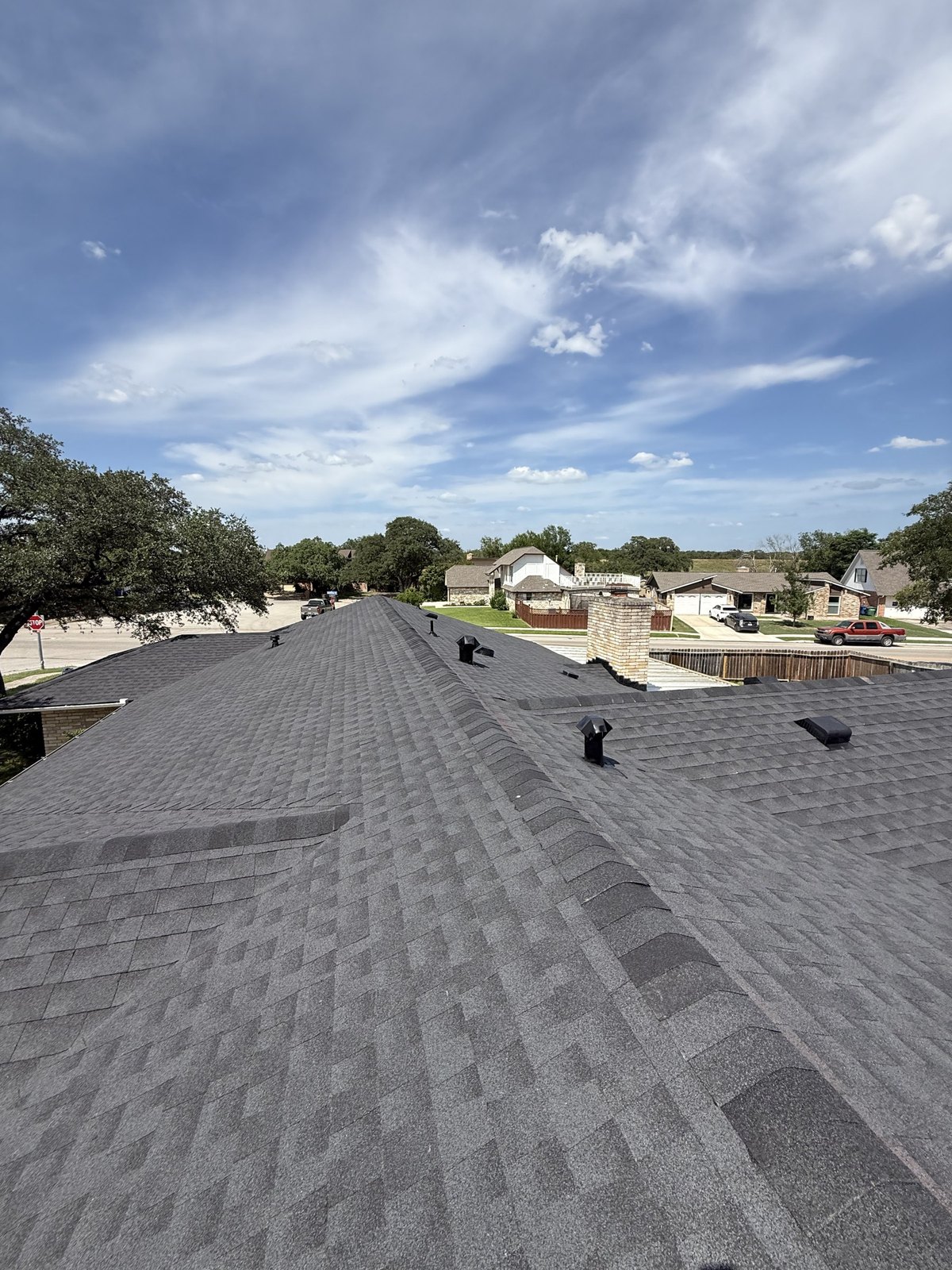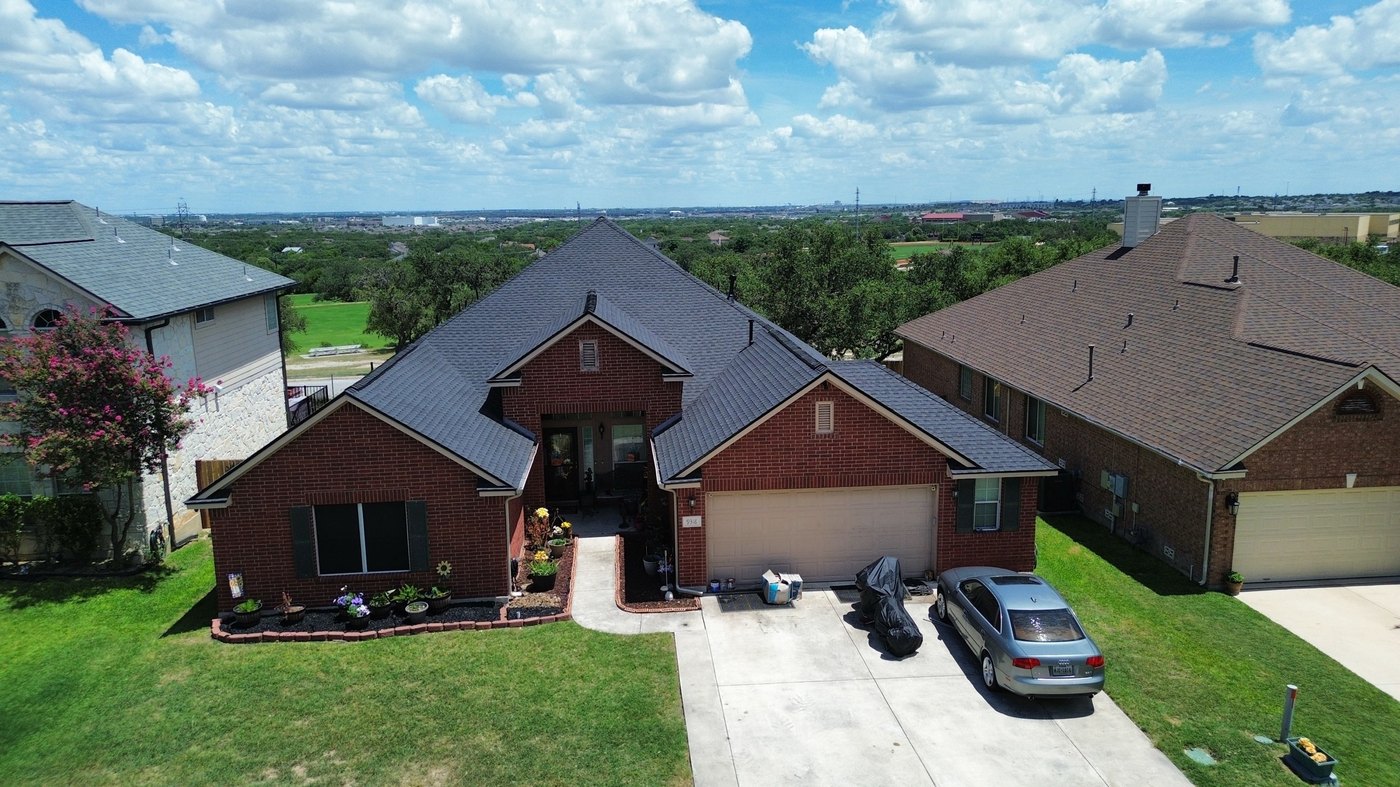
Canyon Lake is not a city — it’s a collection of communities spread across the hills and shoreline of a 8,230-acre reservoir in Comal County. That distinction matters for roofing. There’s no single building code authority, no unified permitting office, and no standard lot type. A lakefront vacation cabin on a narrow lot in Canyon Lake Village is a fundamentally different roofing project than a 4,000-square-foot custom home on five acres in Mystic Shores overlooking the Guadalupe River. We understand that range and plan every job for what it actually is.
We’re Holmes Roofing, and we serve Canyon Lake from our Selma base. US-281 North to FM-306 or I-35 to Canyon Lake — either route puts us at most properties in 40-50 minutes. We’ve worked on lakefront homes where material delivery means navigating steep driveways down to the waterline, ridgetop custom builds where wind exposure is the primary design factor, and everything in between. The Hill Country terrain around Canyon Lake creates roofing conditions that flatland contractors from San Antonio or Austin aren’t prepared for, and we bring the right equipment, materials, and experience to handle them.
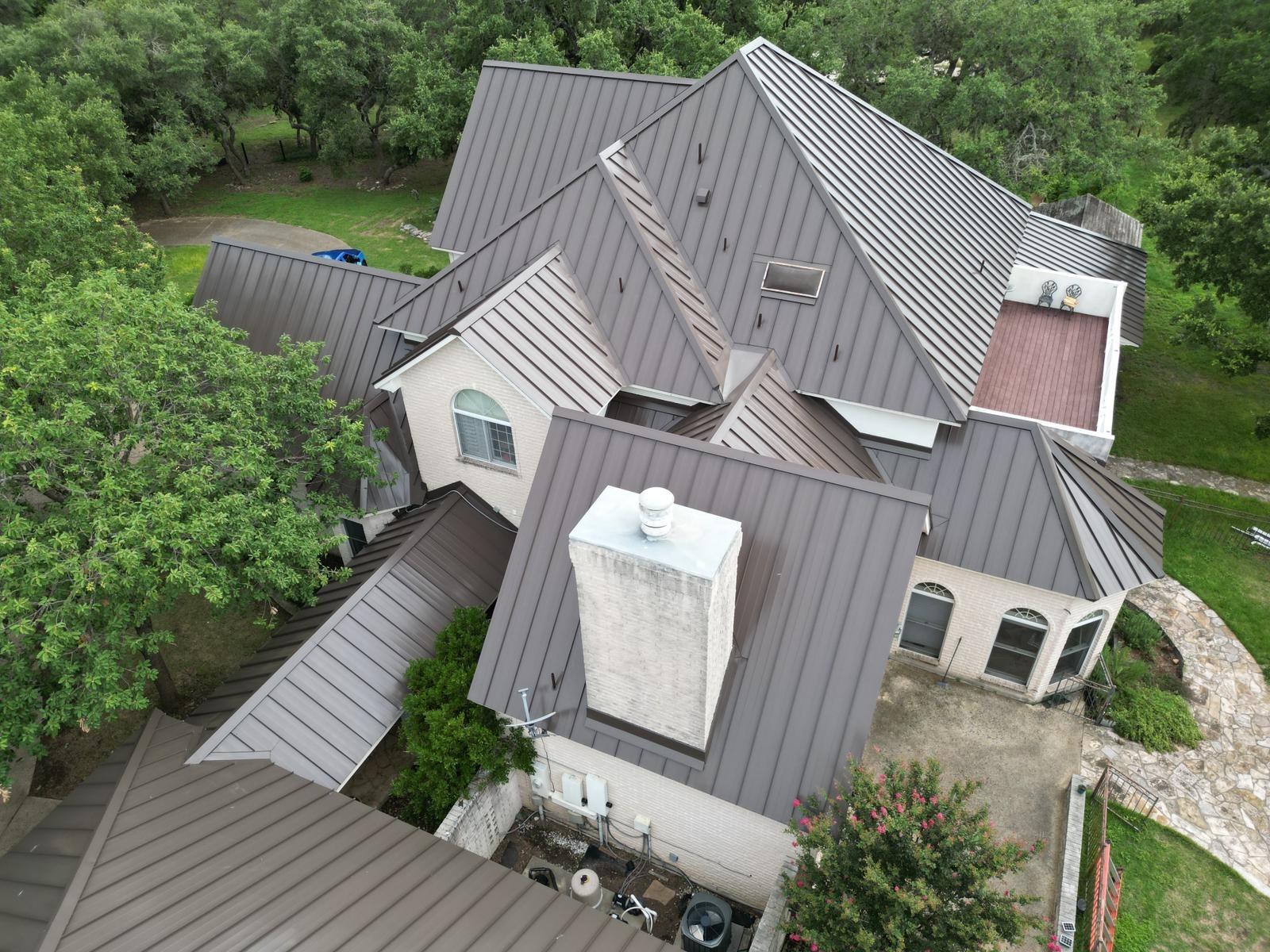
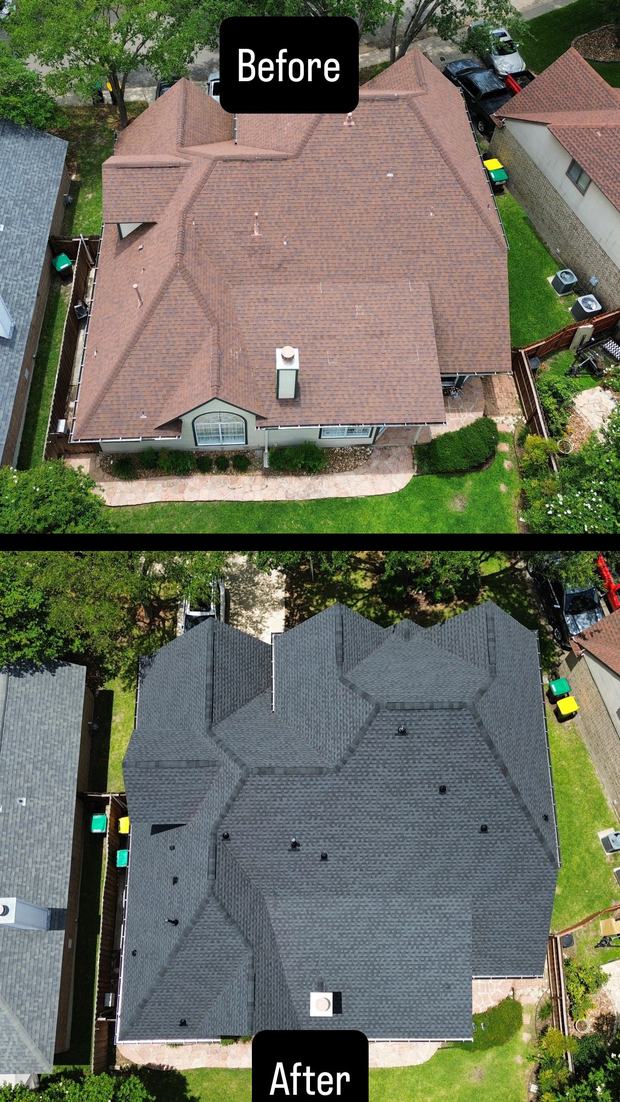
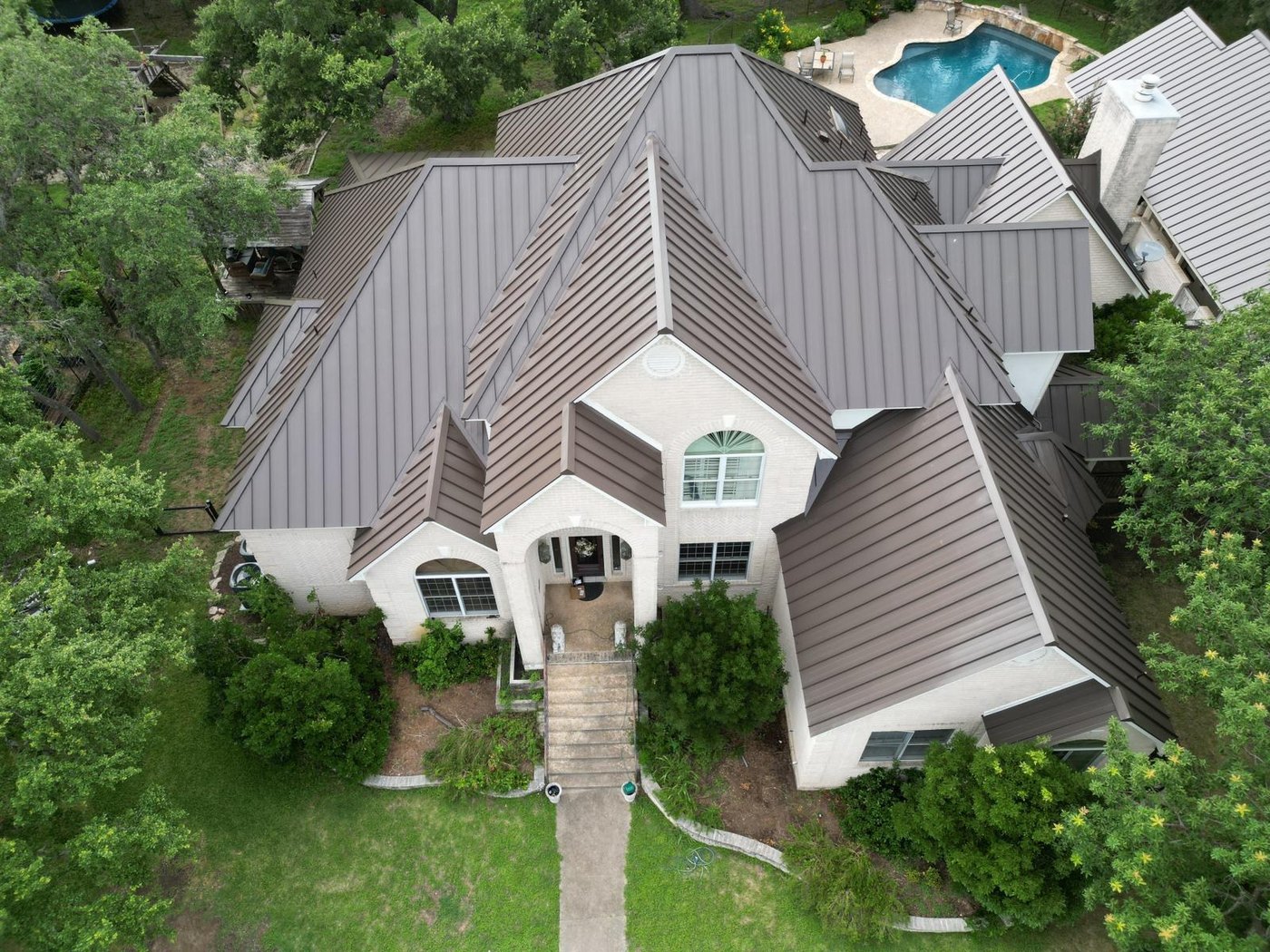
Roof Replacement — Canyon Lake homes range from 1970s-era cabins built as weekend retreats to modern custom homes designed for full-time Hill Country living. Each type requires a different replacement approach. On older cabins, we evaluate structural capacity before specifying materials — many were built to vacation-home standards with lighter framing than a primary residence would require. On custom homes, we work within HOA architectural guidelines (Mystic Shores, Canyon Lake Hills, and several other communities have specific material and color requirements) and specify materials that perform under the elevated wind and hail exposure of ridgetop Hill Country lots. Standing seam metal is increasingly the standard for Canyon Lake homes where longevity and storm resistance justify the investment.
Roof Repair — Canyon Lake’s Hill Country terrain creates repair patterns that differ from metro San Antonio. Wind damage is more common and more severe — ridgetop homes without tree buffers take sustained gusts that peel shingles and lift flashing. Cedar (Ashe juniper) and live oak branches overhang rooflines throughout the canyon areas, causing both direct impact damage during storms and chronic debris-related deterioration between storms. We address root causes rather than symptoms — trimming problematic branches is part of the repair scope when tree contact is the damage driver.
Metal Roofing — Metal is the dominant material choice for Canyon Lake homes being built today, and it’s the most common upgrade path for homeowners replacing composition roofs. The reasoning is straightforward: standing seam metal handles the larger hail that forms in the elevated Hill Country terrain, resists the sustained winds on exposed lots, lasts 40-60 years without replacement, and aesthetically fits the stone-and-timber Hill Country architecture that defines the area. We install 24-gauge standing seam panels in earth-tone and weathered finishes that complement limestone exteriors and meet the architectural requirements of communities like Mystic Shores and Canyon Lake Hills.
Storm & Hail Damage — Canyon Lake’s elevation (roughly 900-1,100 feet depending on the specific community) places it squarely in the Hill Country hail formation zone. The area has been under severe weather warnings 55 times in the past year alone, with trained spotters reporting ground-level hail on 16 occasions. These are not minor events. Storms that form over the Edwards Plateau carry hailstones down through the canyon terrain, and the topography can channel and accelerate wind. We provide free post-storm inspections across the Canyon Lake area and prioritize this community because damage here tends to be more severe than what the same system produces at lower elevations.
Storm season never really ends in the Hill Country. Call (210) 440-1013 after any significant weather event for a free inspection. We’ll document everything your insurer needs to see.
Gutter & Drainage Systems — Hill Country terrain means water moves fast. Canyon Lake properties on slopes need gutter systems designed for volume and velocity — oversized 6-inch seamless aluminum with strategically placed downspouts that direct runoff away from foundations and toward natural drainage paths. On lakefront properties, we integrate gutter drainage with the existing site grading to prevent erosion on the slope between the home and the waterline.
Canyon Lake roofing breaks into two distinct categories based on where the home sits relative to the reservoir:
Lakefront and low-elevation properties face humidity, moisture, and access challenges. Homes near the waterline experience higher ambient humidity year-round, which accelerates algae growth on north-facing shingle slopes and corrodes metal flashings faster than homes on higher ground. Lake-effect moisture can create fog and condensation patterns that keep roof surfaces wet longer after rain. Access to these homes often involves steep driveways that limit what delivery trucks and equipment trailers can navigate — we plan material staging and equipment positioning before mobilizing rather than discovering access problems on day one.
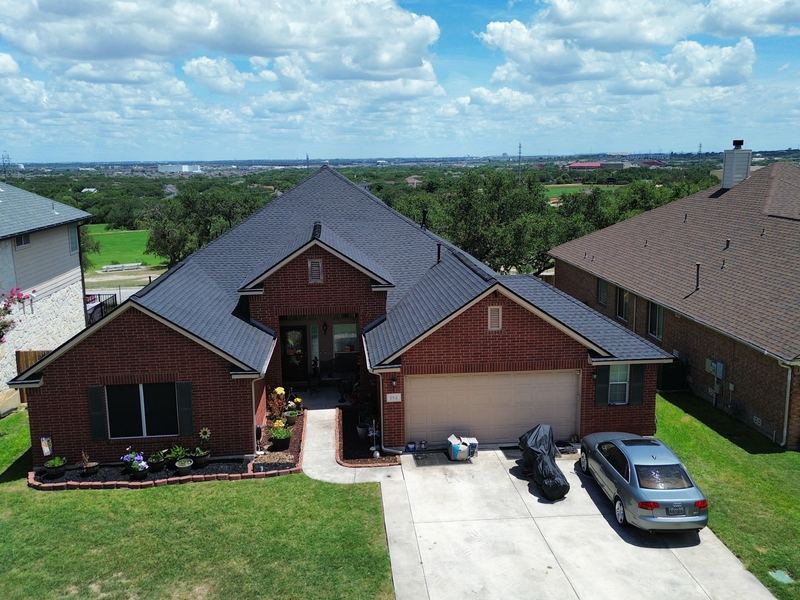
Hilltop and ridgeline properties face wind, hail, and sun exposure. Homes perched on the limestone bluffs above the lake have panoramic views, but those unobstructed sightlines mean unobstructed wind exposure. We spec high-wind-rated materials (130+ mph shingle ratings, upgraded fastener patterns on metal panels) for any Canyon Lake home above the canyon floor. UV exposure is also more intense on ridgetops without tree canopy, which accelerates shingle granule loss and thermal cycling degradation.
Mystic Shores — The largest community in the Canyon Lake area, with over 2,200 homes on a mix of waterfront, hilltop, and interior lots nestled between the Guadalupe River bends and Canyon Lake’s north shoreline. Mystic Shores has architectural guidelines enforced by the Property Owners Association — roofing materials, colors, and profiles must meet community standards. Homes here range from 1,200-square-foot cottages to 5,000-square-foot custom builds on multi-acre lots with Hill Country views. We maintain familiarity with Mystic Shores’ architectural requirements and submit material specs for approval before beginning work. The terrain within Mystic Shores varies dramatically — some lots are relatively flat, others are perched on limestone bluffs with 30-foot grade changes from street to structure. We assess access and staging requirements during the estimate visit, not as a surprise on installation day.
Canyon Lake Hills — Homes here date primarily from the early 2000s, with living areas ranging from 1,276 to over 4,000 square feet. The community sits in the heart of the Hill Country terrain, with lots carved into the limestone hills surrounding the lake. Roofing concerns in Canyon Lake Hills center on the age of the housing stock — homes from 2001-2005 are now 20+ years old, putting original composition roofs at or past their expected service life in Hill Country conditions. This is the replacement cycle window, and we’re seeing increasing volume from this community as original roofs age out.
Canyon Lake Village — An older community with homes built around 1990, averaging 2,500 square feet. These 35-year-old homes represent a different roofing challenge than newer communities: they’ve been through multiple hail events, may be on their second or third roof, and the accumulated stress on decking and flashing from decades of South Texas weather requires thorough inspection during replacement. We strip to the deck on Canyon Lake Village roofs and replace damaged sheathing — something that shortcuts-oriented contractors skip by overlaying new shingles on questionable substrate.
Startzville and Sattler — These older Hill Country communities along FM-2673 and FM-306 predate the Canyon Lake reservoir itself. Homes here range from original 1950s-60s rural properties to more recent infill construction. The older homes often have non-standard framing, additions built in different eras with different methods, and roofing histories that include everything from wood shingles to metal to multiple layers of composition. These are the most complex roofing projects in the Canyon Lake area, and they require a contractor who can read the structure and adapt rather than applying a standard production approach.
Vacation and Rental Properties — A significant portion of Canyon Lake’s housing stock serves as second homes or short-term vacation rentals. These properties face roofing maintenance gaps because the owner isn’t on-site to notice early warning signs — a small leak in a vacation cabin can run for months before anyone sees the ceiling stain. We offer annual inspection services for absentee owners and property managers, catching problems at the minor-repair stage before they become major-replacement emergencies.
Canyon Lake’s elevation provides modest thermal relief compared to San Antonio — 5-10 degrees cooler on average summer days, with mornings that can be 15-20 degrees cooler during cold fronts. But the tradeoff is greater freeze-thaw cycling in winter. Canyon Lake regularly sees freezing temperatures that San Antonio misses, and the transition from overnight freeze to afternoon warmth creates expansion-contraction stress on roofing materials. This cycling is particularly hard on flashing, sealants, and the adhesive strips on shingle tabs. We use high-temperature-range sealants and specify shingles with cold-weather flexibility ratings appropriate for Hill Country conditions rather than the standard South Texas specifications.
The cedar and live oak canopy throughout the canyon areas creates microclimates on individual roofs — a south-facing slope in full sun ages differently than a north-facing slope shaded by a 60-foot live oak. We evaluate each slope independently rather than treating the whole roof as a single condition, because the appropriate repair or replacement timing for one slope may differ from another by several years.
We know Hill Country terrain. Steep driveways, limestone bluffs, ridgetop wind exposure, lakefront humidity — Canyon Lake roofing requires solutions specific to this landscape. We don’t apply San Antonio suburban methods to Hill Country properties.
Metal roofing expertise. We install standing seam, corrugated, and stone-coated steel systems — not just composition shingles. Canyon Lake’s shift toward metal roofing requires a contractor with crew training and equipment for complex metal installations on steep, irregularly shaped rooflines.
GAF-certified. For composition roof installations, our GAF certification provides manufacturer-backed warranty coverage on materials and labor. That warranty is transferable — important for Canyon Lake property owners who may eventually sell.
We serve the whole Canyon Lake area. Mystic Shores, Canyon Lake Hills, Canyon Lake Village, Startzville, Sattler, and the unincorporated areas between them. We know which roads flood after heavy rain, which driveways can handle a delivery truck, and which communities require HOA pre-approval.
Need an inspection at your Canyon Lake property? Call (210) 440-1013. We serve both full-time residents and absentee owners with scheduled inspections and documented reports.
Answers by Joshua Holmes, Owner — Holmes Roofing & Exterior Solutions, Selma, TX.
Who issues the permit for roofing work in Canyon Lake — there’s no city, right?
Correct. Canyon Lake is unincorporated Comal County, so there’s no city hall here — building permits are handled through Comal County’s permit office rather than a municipal department. If your home is inside the Canyon Lake Property Owners Association, the POA also runs its own permit and architectural-review process. We handle both the county permit and the POA submission so you’re not chasing two offices.
My home is in a POA. Do I need their approval before re-roofing?
If you’re in the Canyon Lake POA (or another lake-area association), yes — they typically require an architectural/permit submission before exterior work begins. We prepare the packet — proof of insurance, license, and material specs — and wait for written approval before we start.
Is a metal roof a good choice out here?
It’s a popular Hill Country option for good reasons: long lifespan, fire resistance, and strong performance against hail and wind. Whether it’s right for your home depends on slope, structure, budget, and any POA color/material rules. We’ll walk you through metal versus architectural shingle honestly rather than steering you to the higher-ticket product.
How soon after a hailstorm should I get inspected?
Within 7–14 days. The Canyon Lake / New Braunfels area sees frequent hail — radar has detected hail near New Braunfels on dozens of occasions, including multiple times in the past year. Early documentation protects your insurance claim. Our inspections are free.
Do you actually come out to Canyon Lake?
Yes. We serve the lake area from our Selma base. Call (210) 440-1013 for a free, no-obligation inspection — and we’ll confirm whether your property falls under county-only permitting or a POA as part of the visit.