Georgetown, TX
Holmes Roofing & Exterior Solutions
Your Georgetown Roofing Contractor
We’ll be upfront: Georgetown is the northern edge of our service area, about 60 miles up I-35 from our home base in Selma. We’re not the closest roofer in town. But we’re the contractor who shows up because we chose to serve Georgetown — not because we ran out of work closer to home. We’ve built a solid reputation along the I-35 corridor, from Selma through San Marcos and into Williamson County, and Georgetown homeowners started calling us by referral. We keep coming back because the work here is worth the drive and the people are worth knowing.
Georgetown is a different roofing market than San Antonio. The city has exploded past 100,000 residents — a 71% increase since the 2020 census — but it hasn’t lost its character. You’ve got Sun City retirees on fixed incomes who need honest assessments, not upsells. You’ve got Berry Creek homeowners with 25-year-old custom roofs approaching their first replacement. You’ve got brand-new construction in Wolf Ranch and Parkside on the River where the shingles haven’t seen their first real hail season yet. Each situation calls for a different conversation, and we know how to have all of them.
What a roof replacement costs in Georgetown: Sun City single-story homes with straightforward geometry start around $16,000–$22,000; standard two-story homes in Wolf Ranch or Georgetown Village typically run $20,000–$28,000, with premium materials and complex rooflines running higher — and most replacements are completed in a single day. Get your exact number with a free inspection: (210) 440-1013.
Roofing Services We Provide in Georgetown
Roof Replacement — Georgetown’s housing stock spans four decades of building codes. A 1996 Sun City original has different ventilation specs, decking standards, and shingle ratings than a 2024 Wolf Ranch build. We assess what your roof was built to, what current Williamson County code requires, and what actually makes sense for your home’s remaining lifespan. We handle the Georgetown permit process, coordinate with your HOA’s architectural review committee, and work directly with your insurance carrier if the replacement is storm-related.
Roof Repair — Not every roof problem is a full replacement. A cracked pipe boot, wind-lifted shingles along a ridge cap, or a slow leak at a valley joint — these are surgical fixes that protect the rest of your investment. In Georgetown’s older neighborhoods like Serenada and the historic districts, repair work often makes more financial sense than replacement, especially on homes where the roof structure is sound but individual components have worn out.
Storm & Hail Damage — Georgetown sits squarely in the Central Texas hail belt. The city has recorded 113 hail reports within 10 miles of the city center since 2004, including stones up to 4 inches (grapefruit-sized). In May 2026 alone, storms dropped quarter-sized to golf-ball-sized hail across Georgetown and Round Rock. When a storm hits, we offer free inspections within 72 hours. We photograph every square of damage for your insurance adjuster and walk you through the claims process — including supplements when the initial scope comes in short.
Worried about storm damage? Call (210) 440-1013 or schedule your free inspection online.
Gutter Installation & Repair — Georgetown’s terrain sits on Edwards Plateau limestone with thin topsoil. Rainwater runs off fast instead of absorbing, which makes proper gutter sizing and downspout placement critical for foundation protection. We install seamless aluminum gutters sized to your actual roof area and Georgetown’s rainfall patterns — roughly 34 inches annually, with the heaviest events concentrated in spring when thunderstorms track northeast along the I-35 corridor.
Siding & Exterior — From Hardie board replacement on a 20-year-old Berry Creek home to full exterior refresh on a Sun City single-story, we handle the complete building envelope. Georgetown’s UV exposure and temperature swings — 105-degree summer days followed by the occasional Hill Country freeze — accelerate wear on siding, fascia, and trim faster than you’d see in a milder climate.
What Makes Georgetown Roofing Different
Hill Country Edge Climate
Georgetown sits at the geological transition between the Blackland Prairie and the Edwards Plateau — the beginning of the Texas Hill Country. This isn’t just scenic trivia. It affects roofing in specific ways. Storms that form over the Hill Country to the west gain energy as they track northeast along I-35, and the terrain channeling effect can produce severe hail in Georgetown while communities 20 miles south see clear skies. The slightly higher elevation (750-850 feet) also means marginally more wind exposure than the San Antonio suburbs, which puts more stress on ridge caps, drip edges, and anything with a mechanical fastener.
Dark shingles in Georgetown can crack 170 degrees on a July afternoon. Winter mornings occasionally dip below freezing, especially in January and February. That thermal cycling — extreme expansion and contraction across seasons — wears out roofing materials faster than the manufacturer’s rated lifespan suggests. Proper attic ventilation, radiant barriers, and lighter-colored shingles aren’t luxury upgrades in Georgetown. They’re what separate a roof that gives out around year 18 from one that’s still performing at 25.
Neighborhood-Specific Considerations
Sun City (Del Webb 55+) — Georgetown’s largest residential community: 5,300 acres, approximately 8,500 homes, and over 15,000 residents. Built continuously since 1996, Sun City has homes spanning nearly 30 years of construction. The earliest phases are now on their second roof replacement. Homes range from 940 to 3,000+ square feet, predominantly single-story with low-to-moderate pitch roofs — straightforward geometry that keeps replacement costs reasonable. Many Sun City homeowners are on fixed retirement incomes. We provide honest assessments. If a $500 repair buys you five more years, we say so. The Sun City Community Association has architectural standards for roofing materials and colors — we handle that approval process as part of the job.
Berry Creek — An established golf-course community of roughly 1,200 homes built through the 1990s and 2000s. Three sections: Berry Creek proper, Villages of Berry Creek, and Reserve at Berry Creek. The Reserve features larger custom homes (2,600-5,500+ sq ft) on quarter-to-half-acre lots with complex roof planes, multiple valleys, and steep pitches. HOA fees are approximately $650/year, and the architectural committee reviews exterior changes including roofing material and color. Homes in the original Berry Creek sections are 25-30 years old — prime replacement territory. The 18-hole golf course creates an open-exposure wind corridor that hits roofs along the fairways harder than homes in sheltered interior streets.
Wolf Ranch — Hillwood Communities’ 755-acre master-planned development along Highway 29 and I-35. When complete, Wolf Ranch will include 1,600 single-family homes and 900 multi-family units. Current construction features seven builders and modern code compliance — radiant barriers, proper ventilation ratios, and in many cases Class 4 impact-resistant shingles. Our work in Wolf Ranch is primarily builder-quality inspections for new home buyers, warranty assessments, and repairs when young roofs take their first hail hit. If your builder installed standard shingles rather than Class 4 rated, upgrading during your first replacement qualifies you for insurance discounts up to 28% on the wind/hail portion of your premium.
Cimarron Hills — Georgetown’s premier luxury golf community, designed around a Jack Nicklaus golf course. Custom residences here feature stone and stucco exteriors with a European “Texas Tuscany” aesthetic. Roofing materials run the spectrum — standing-seam metal, natural slate, synthetic slate, premium designer shingles, and clay tile. These are not standard replacements. Each home is one-of-a-kind, and material matching requires sourcing from specialty suppliers. We coordinate with the community’s architectural review to ensure any roofing work preserves the design intent of the original build.
Serenada — Three sections (Country Estates, East, and West) with a range of lot sizes and home styles. Country Estates features spacious properties with a rural feel. Serenada homes span multiple decades, so we see everything from original composition shingles that have exceeded their rated life to relatively recent installs. The mix of architectural styles — traditional ranch, Hill Country contemporary, and some custom builds — means no two roofing jobs here are alike.
Shady Oaks Estates — Located about five miles northwest of Georgetown on Highway 195, adjacent to Sun City. Acre-plus homesites with mature live oak trees surrounding spacious Texas stone homes. The large canopy coverage means more debris accumulation in valleys and behind penetrations, accelerated algae growth on north-facing slopes from persistent shade, and occasional branch-impact damage. Our inspections here focus on the areas where tree coverage creates maintenance issues that wouldn’t exist on a fully exposed roof.
Georgetown Village, Parkside on the River, Nolina & Parmer Ranch — Georgetown’s newer master-planned communities, featuring modern construction from builders including Chesmar, Perry, Highland, Taylor Morrison, and M/I Homes. These homes comply with current energy codes and generally have well-installed roofs. Our role in these neighborhoods is primarily post-storm inspections, new-home buyer assessments, and catching the occasional builder shortcut — improper step flashing at wall-to-roof transitions, insufficient caulking at pipe boots, or ventilation that looks right but doesn’t meet the calculation for the actual attic volume.
Escalera Ranch — All custom-built homes designed to preserve the natural landscape, featuring local stone and standing-seam metal roofs. One of Georgetown’s most exclusive neighborhoods. Metal roof maintenance here is different from shingle work — checking fastener integrity, inspecting panel seams for thermal movement damage, and verifying that sealant at penetrations hasn’t degraded after UV exposure.
Historic District Considerations
Georgetown has something most Central Texas cities don’t: a genuinely significant historic downtown. The Williamson County Courthouse Historic District, listed on the National Register of Historic Places since 1977, contains over 46 contributing structures and represents one of the finest collections of Victorian commercial architecture in Texas. The American Planning Association named Georgetown’s downtown one of the nation’s Great Places in 2018.
Two overlay zoning districts govern preservation: the Downtown Overlay District (historic downtown and surrounding commercial/residential areas) and the Old Town Overlay District (primarily residential areas between Downtown and Southwestern University). The adjacent Belford Historic District chronicles architectural evolution from the 1870s through the 1930s, and the Olive Street Historic District (designated 2013) adds another layer of protected residential properties.
If your home falls within any of these districts, roofing work requires a Certificate of Appropriateness (COA) from the Historic Preservation Officer or the Historic and Architectural Review Commission (HARC). The COA review evaluates your project against the Downtown and Old Town Design Guidelines and the Unified Development Code. This means material choices, colors, and even installation methods may be restricted to preserve the historic character of the structure.
We’ve worked on historic properties and understand the process. We’ll identify whether your home is in a designated district before we quote, factor COA requirements into the timeline, and help select materials that satisfy both preservation standards and modern performance needs. Georgetown also offers a Historic Tax Exemption Program — a partial property tax break for 10 years for owners who invest at least $10,000 in approved renovation work, including roofing on qualifying structures.
Building Permits in Georgetown
Georgetown requires a permit for all roof replacements within city limits. The city has adopted the 2021 International Residential Code (IRC) and the 2021 International Energy Conservation Code (IECC). All permits are submitted online through the city’s MGO (My Government Online) portal. Current processing time for roofing permits is 10-15 business days due to application volume — a reflection of how fast Georgetown is growing.
Re-roofing over an existing layer is allowed under specific conditions, but we generally recommend full tear-off to the deck. It lets us inspect decking for rot, water damage, or previous repairs that were done poorly. Most insurance claims require full removal anyway. If damaged decking is discovered during tear-off, an additional inspection is required before the new roof covering goes on — we note this in the permit application upfront so it doesn’t cause delays.
For homes in the ETJ (extraterritorial jurisdiction) outside Georgetown city limits but within Williamson County, permit requirements differ. We verify jurisdiction before starting any project.
Why Georgetown Homeowners Choose Holmes Roofing
We make the drive for a reason. Georgetown is the northern limit of our service area. We don’t come this far because we need the work — we come here because Georgetown homeowners value quality over convenience, and that’s exactly how we operate. Our reputation along the I-35 corridor precedes us, and the referrals keep us coming back.
GAF-certified installer. We install GAF products exactly the way the manufacturer designed them to go on, which qualifies your roof for enhanced warranty coverage that non-certified contractors can’t offer. GAF’s warranty covers both materials and labor — if a shingle fails within the warranty period, you’re covered for the full fix, not just the product.
Insurance claims experience. Georgetown homeowners file hail claims regularly — this city gets hit. We’ve worked with every major carrier active in Williamson County: State Farm, USAA, Allstate, Liberty Mutual, Farmers, and the regional mutuals. We document damage the way adjusters need to see it, and we handle supplements when the initial estimate comes in short. You shouldn’t have to fight your insurance company alone.
Honest recommendations, always. If your Sun City roof needs a $400 pipe boot repair and not a full tear-off, we’ll say so. If your Berry Creek roof has five good years left but should be on your financial radar, we’ll tell you that too. A contractor doesn’t build a referral network 60 miles from home by overselling — he builds it by being right.
Licensed and insured. Texas HIC License HIC-24-00928. Full liability and workers’ compensation coverage on every job.
We also serve the neighboring communities of Round Rock, and Pflugerville.
Georgetown Roofing FAQ
Answers by Joshua Holmes, Owner — Holmes Roofing & Exterior Solutions, Selma, TX.
How much does a roof replacement cost in Georgetown?
Georgetown costs vary widely by community. Sun City single-story homes with straightforward geometry start around $16,000-$22,000. Standard two-story homes in Wolf Ranch or Georgetown Village typically run $20,000-$28,000. Berry Creek and Cimarron Hills homes with multiple valleys, steep pitches, and premium materials run higher. Insurance claims cover most or all of the cost when hail or storm damage is documented.
Do I need a permit for a new roof in Georgetown?
Yes. The City of Georgetown requires a building permit for all roof replacements. We submit the permit through the city’s online portal as part of our standard process. Current turnaround is 10-15 business days. If your home is in a historic overlay district, a Certificate of Appropriateness is also required — we handle that process for you.
How long does a roof replacement take in Georgetown?
Most residential roofs are completed in 1-2 days. Complex roofs with steep pitches, multiple planes, or specialty materials may take 2-3 days. We start early (6-7 a.m.) to maximize cooler morning hours, which matters in Georgetown’s summer heat.
Do you service homes outside Georgetown city limits?
Yes. We work throughout Williamson County in the Georgetown area, including homes in the ETJ and unincorporated areas along FM 2338, FM 3405, and the Highway 29 corridor. Permit requirements differ outside city limits — we verify jurisdiction before quoting.
Is it worth upgrading to impact-resistant shingles in Georgetown?
Given Georgetown’s hail frequency — 113 reports in 10 miles since 2004 — Class 4 impact-resistant shingles are a strong investment. Most Texas insurers offer premium discounts of 15-28% on the wind/hail portion of your policy for Class 4 rated roofs. The upfront cost increase is typically recovered through insurance savings within 3-5 years.
Get a Free Roof Inspection in Georgetown
Whether you’re dealing with storm damage, your roof is getting up in years, you’re buying a home in one of Georgetown’s growing communities, or you own a historic property and need a contractor who understands preservation requirements — give us a call. We’ll come take a look, no charge and no obligation.
Recent Roof Work in Georgetown
Recent Holmes Roofing jobs completed in Georgetown — real work, photographed on site (not stock):
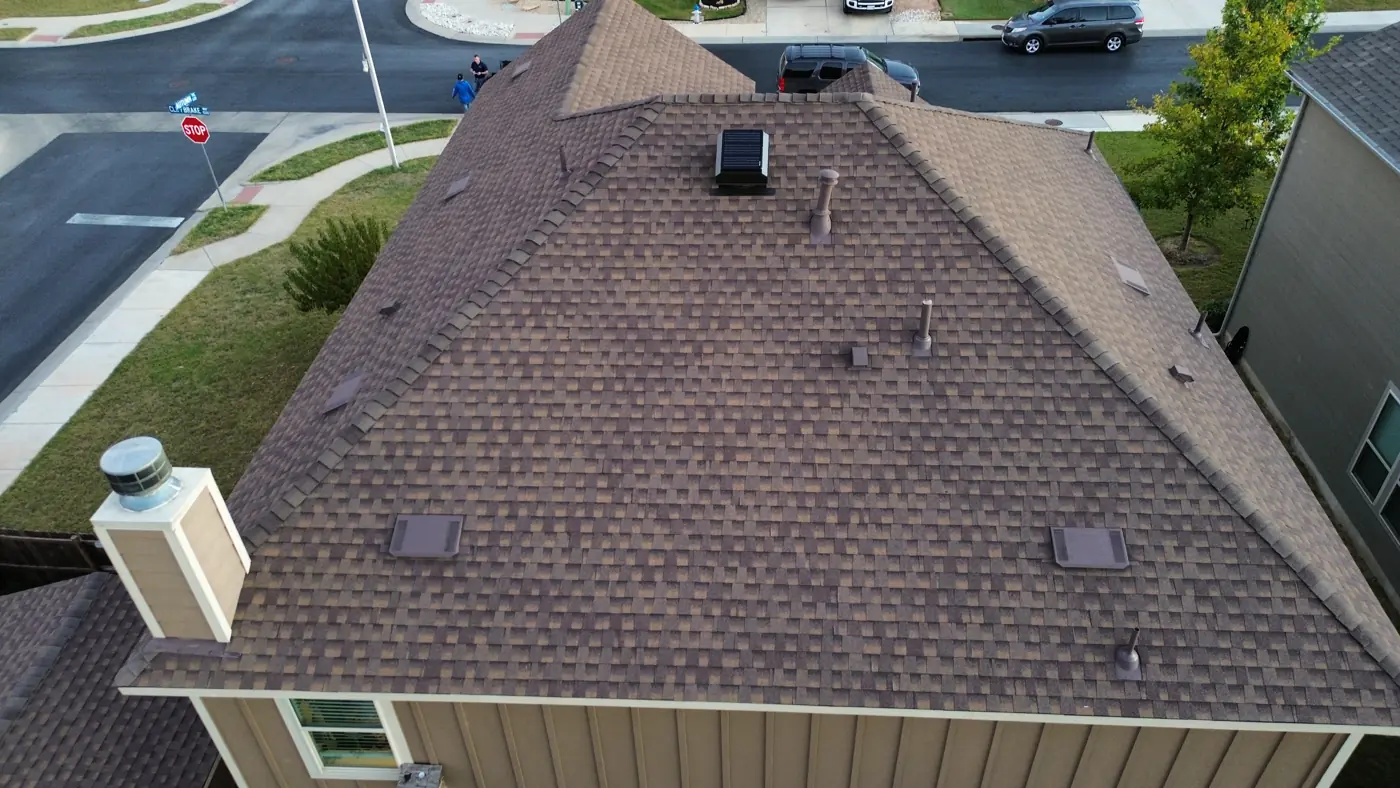
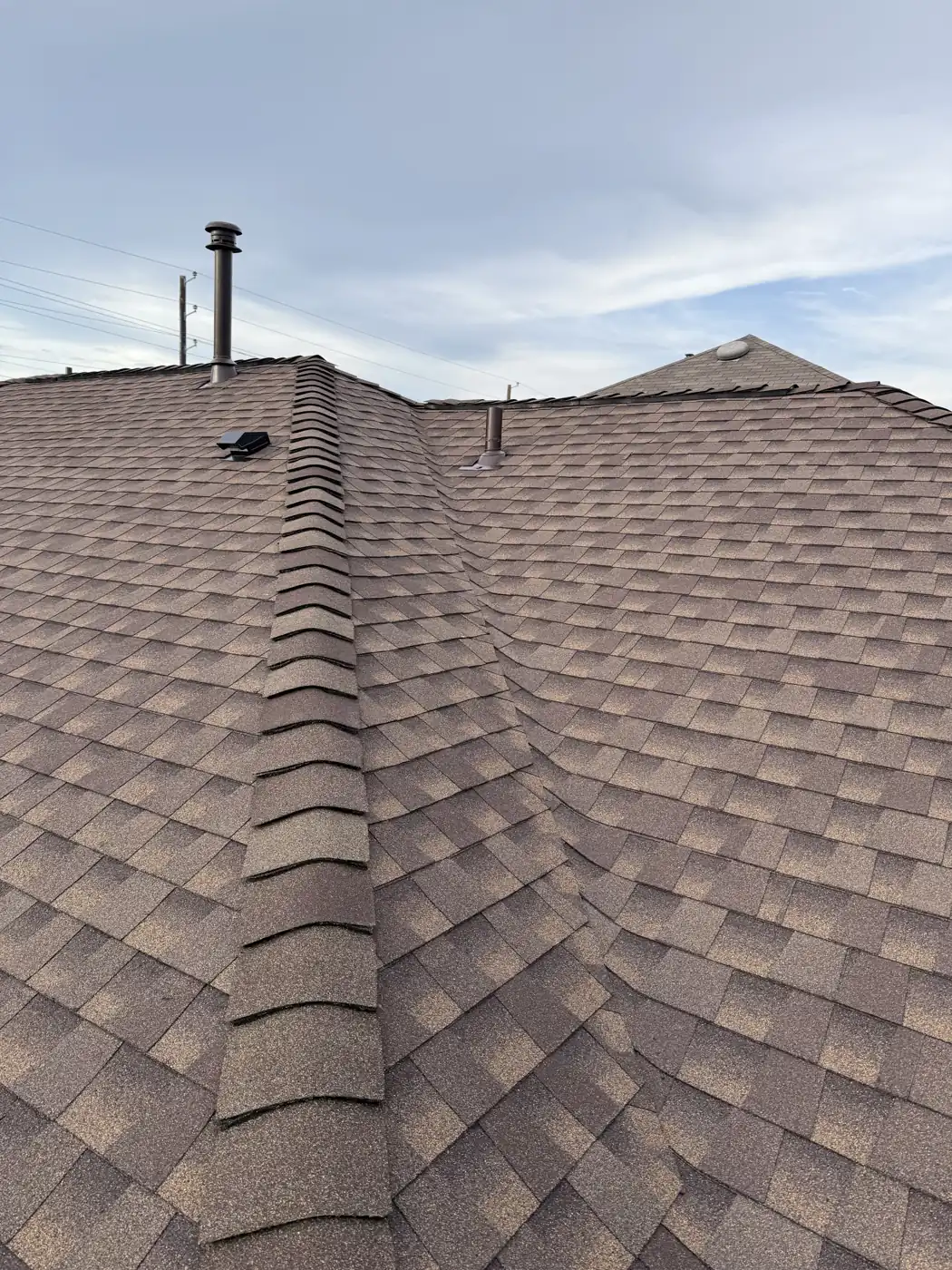
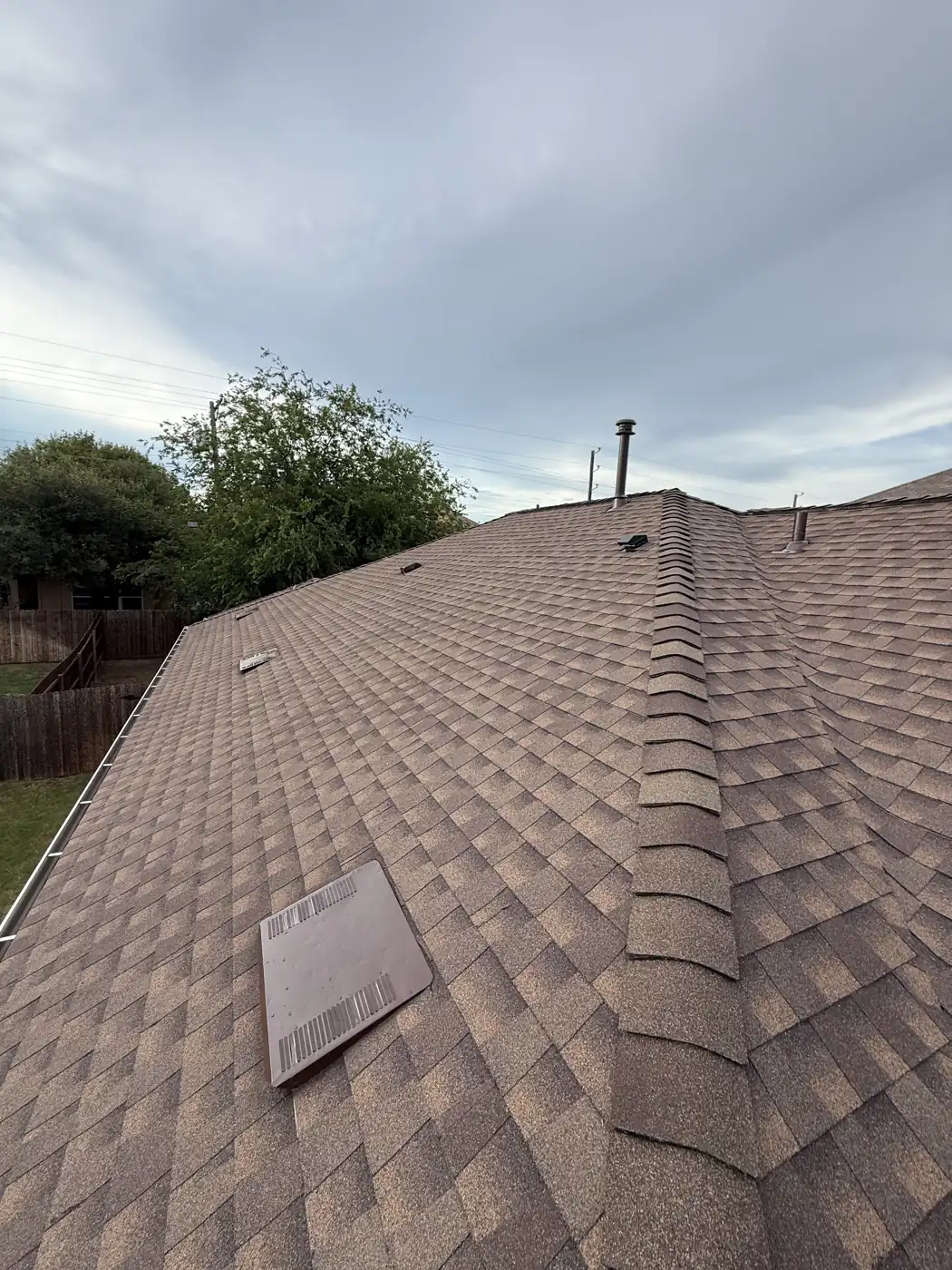
Roofed in your part of Georgetown? Ask during your free inspection and we’ll show you comparable completed jobs nearby.